How Long Does a Basement Renovation Take? Timelines and What to Expect

One of the most common questions we hear from homeowners is:
“How long will my basement renovation take?”
And it’s a fair question. Whether you’re transforming your basement into a home office, a guest suite, or a legal rental unit, you want to know how it will affect your day-to-day life—and how soon you’ll be able to enjoy the finished space.
The short answer? Most basement renovations take 4 to 12 weeks, depending on the size, scope, and complexity of the project. But to give you a better picture, we’re breaking down the entire renovation process—phase by phase—so you know what to expect, how to plan, and what can cause delays.
Want your renovation managed from start to finish—with no surprises? Learn more about our basement renovation services.
Average Time to Finish a Basement
Basement renovations typically fall into three tiers:
- Light cosmetic renovation (no plumbing or major layout changes): 4–6 weeks
- Full basement finishing with bathroom, flooring, and drywall: 6–10 weeks
- Legal secondary suite or high-end custom build: 10–14 weeks or longer
Several factors affect your timeline:
- Permit approval delays
- Availability of trades and materials
- Structural or moisture-related issues
- Scope creep (adding work mid-project)
- Project management and contractor reliability
Phase 1: Planning and Design (1–2 Weeks)
Every successful basement renovation starts with a solid plan. The planning phase is where ideas turn into action—and where the foundation for a smooth timeline is laid.
What happens during this phase:
- Initial consultation and site assessment
- Defining your goals: Will the basement be a living space, rental unit, gym, office, or all of the above?
- Design layout and floor plan drafting
- Choosing finishes: Flooring, paint colours, cabinetry, lighting fixtures
- Material sourcing and quote finalization
This phase usually takes 1–2 weeks, depending on how quickly decisions are made and how detailed the design is. If you’re unsure about what to include, this is a great time to explore high-ROI layouts and must-have upgrades. Need inspiration? Check out basement renovation ideas that boost home value to explore designs that pay off.
Once the design and scope are finalized, the contractor can lock in scheduling, submit permit applications, and order materials—all of which help avoid delays later.
Phase 2: Permits and Approvals (1–3 Weeks)
Once the design is finalized, the next critical step is applying for municipal permits. This is required for nearly every basement renovation in Ontario—especially if you’re adding plumbing, electrical, structural work, or building a secondary suite.
What’s involved:
- Submitting drawings and plans to the local building department
- Waiting for permit review and approval
- Making any revisions if requested by inspectors or officials
Permit timelines can vary by municipality, but most take 1 to 3 weeks to process. If you’re converting your basement into a legal rental unit, expect more documentation and possibly longer review times.
A good contractor will handle all permit applications and revisions for you. Learn more about hiring the right basement renovation contractor.
Phase 3: Demolition and Prep (2–5 Days)
With permits approved, construction begins. The first step? Clearing the space and prepping it for the build.
What happens during this phase:
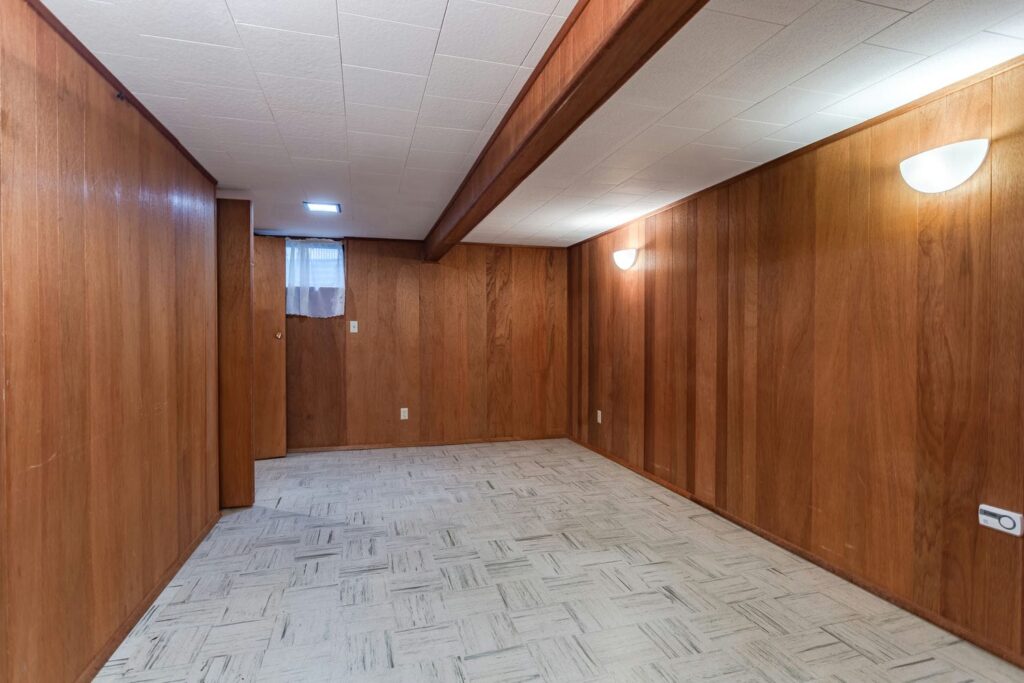
- Removing any existing drywall, framing, or flooring
- Clearing debris and cleaning the space
- Inspecting for hidden issues (mold, cracks, foundation damage)
- Waterproofing if necessary
- Leveling the floor or adjusting ceiling joists if required
While demolition sounds quick, it can reveal surprises that impact your timeline. If your basement hasn’t been updated in decades, prep work may include addressing moisture or correcting past DIY mistakes.
This phase typically takes 2 to 5 days, depending on the condition of the space.
Still deciding if finishing your basement is worth it? Read our breakdown on finished vs. unfinished basements to see the difference in comfort, value, and ROI.
Phase 4: Rough-Ins – Plumbing, Electrical, HVAC (1–2 Weeks)
This is when the bones of your basement take shape. During the rough-in phase, all the essential systems are installed before the walls and floors go in.
Key work completed:
- Plumbing rough-ins for bathrooms, wet bars, kitchens, or laundry
- Electrical rough-ins for outlets, lighting, and appliances
- HVAC work, including ducting, vents, or separate heating zones
- Coordination with city inspectors for initial rough-in approvals
If you’re building a secondary suite, this phase will also involve fire separation, soundproofing prep, and additional mechanical work to comply with building code.
This phase usually takes 1 to 2 weeks, depending on the size of the basement and how many systems are being installed. Planning to include a rental unit? Read how basement suites are designed to code in the GTA.
Phase 5: Framing, Drywall, and Insulation (1–2 Weeks)
Now that your basement’s systems are roughed in, it’s time to bring the space to life.
What’s completed during this phase:
- Framing walls for rooms, closets, storage, or hallways
- Installing insulation to improve energy efficiency and comfort
- Hanging and finishing drywall
- Soundproofing or fire-resistant materials (as required by code for suites)
This stage transforms the space visually—it starts looking like real rooms instead of a concrete shell.
Drywall installation typically includes several rounds of mudding, taping, and sanding, which need drying time between each layer. As a result, this stage usually takes 1 to 2 weeks, depending on size and complexity. Curious what layout options work best for your space? Browse basement renovation ideas that boost home value to explore functional floor plans.
Phase 6: Finishes and Fixtures (1–2 Weeks)
This is where your basement begins to match your vision.
What’s installed:
- Flooring (vinyl, tile, carpet, engineered hardwood)
- Paint, trim, and baseboards
- Doors and door hardware
- Lighting fixtures
- Bathroom vanities, mirrors, and cabinetry
- Kitchenette or bar finishes (if included)
Most of this work is cosmetic, but attention to detail matters. Rushing this stage often leads to missed items on the final walkthrough. That’s why it’s worth investing in a team that gets it right the first time. Want modern finish ideas that resonate with today’s buyers? Read our post on 2025 basement renovation trends.
Phase 7: Final Inspections and Walkthrough (3–5 Days)
Before you can officially enjoy your finished basement, it must pass final inspections. Your contractor should schedule these with the city or relevant municipality and handle all documentation.
This phase includes:
- Final plumbing and electrical inspections
- Code compliance for fire separation and ventilation (if applicable)
- Final walkthrough with your contractor
- Small touch-ups or “punch list” completion
- Deep clean and prep for move-in
This typically wraps up in 3 to 5 days, depending on how responsive inspectors are and whether revisions are needed. Looking for a contractor who handles permits, inspections, and everything in between? Meet our basement renovation company.
Quick Timeline Recap
Here’s a simplified view of how long each phase may take:
- Planning & Design: 1–2 weeks
- Permits & Approvals: 1–3 weeks
- Demolition & Prep: 2–5 days
- Rough-Ins: 1–2 weeks
- Framing & Drywall: 1–2 weeks
- Finishes & Fixtures: 1–2 weeks
- Final Inspections: 3–5 days
Total estimated timeline: 4 to 12+ weeks, depending on scope and complexity.
It’s Not Just About Time—It’s About Doing It Right
Yes, timelines matter—but a finished basement is a long-term investment in comfort, resale value, and daily quality of life.
If your project is managed well from day one—with clear communication, realistic planning, and proper permits—it stays on track and delivers lasting results. But without an experienced team? Delays and surprises are almost guaranteed. Ready to Renovate On Time and On Budget?We manage every phase—from permits to paint—with precision, transparency, and craftsmanship. Request your basement renovation consultation today
Check out more posts below...
What Newmarket Basement Apartments Rent For and What Drives the Rate
Can You Put a Kitchen in Your Basement? Ontario Rules Explained
Basement Backwater Valve Flood Prevention: What It Really Costs in the GTA
In-Law Suite Vs. Legal Rental In Newmarket: Which Fits?