What Newmarket Basement Apartments Rent For and What Drives the Rate
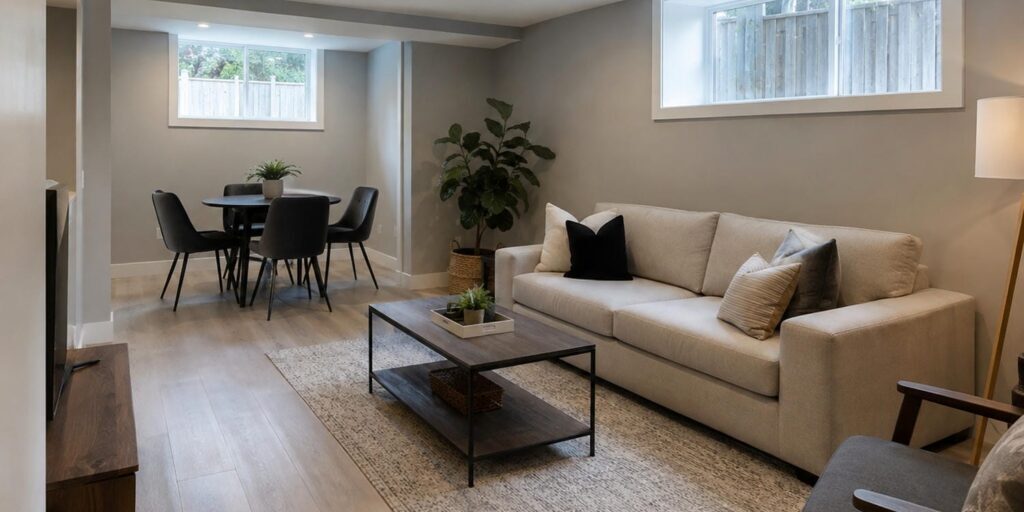
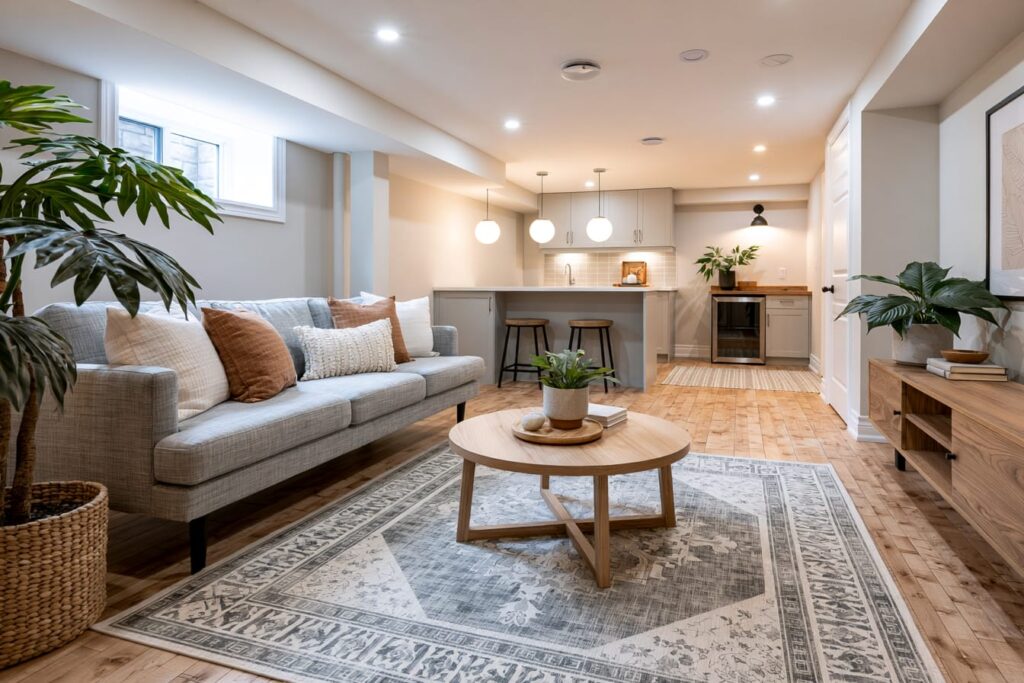
Newmarket basement apartment rent rates sit in a band you can plan around. A finished, legal, separate-entrance one bedroom generally lands between roughly $1,500 and $2,000 a month. Two bedroom suites go above that when they have real windows, parking and their own laundry.
Check that range against comparable suites within a few streets, in the month you plan to list. National rent surveys only count purpose-built apartment buildings. So you price a suite against the apartments your tenant would otherwise rent.
Where a suite lands in that range is decided long before the first tenant calls. That is why a basement renovation in Newmarket planned as a rental earns differently from one finished first and rented later. A basement suite that qualifies as an additional residential unit here is a separate, self-contained home. It has its own private entrance, kitchen, living quarters, sleeping space and bathroom.
What a Newmarket Basement Suite Rents For

You price a suite against what your tenant’s other options cost, then work down from them. The suite trades a lobby, an elevator and a full-height window wall for a lower rent and a house address. Everything below decides how far down you work.
The Planning Range for a One Bedroom and a Two Bedroom Suite
For a one bedroom, plan on roughly $1,500 to $2,000 a month. Two bedroom suites sit above that, for a narrower reason than most owners expect. A second bedroom only counts if it has a window that meets the requirement for a bedroom. Without one, what you built is a one bedroom with a den, and the market prices it as a den.
That range comes from the apartment comparables below, plus what suites in this market actually let for. It is what we see here rather than a published figure. Test it against comparable suites near you before you commit to a build budget.
How That Compares to the Apartments Your Tenant Is Also Shopping
TRREB’s quarterly rental market report counts condominium apartments leased through MLS across the GTA. In the first quarter of 2026 it put the average bachelor condo apartment at $1,821, the one bedroom at $2,246 and the two bedroom at $2,939. All three were down from a year earlier.
Those GTA condo apartments are your tenant’s other options, and none is a basement suite. Urbanation prices condo apartment leases across the Toronto and Hamilton area at $3.74 per square foot, the measure that transfers most cleanly to a suite of known size. A basement suite prices below all of them, trading daylight and a lobby for a lower rent and a house address. The gap between those numbers is the room a suite has to compete on price.
These are the apartment comparables a Newmarket tenant is also shopping, measured across the GTA and the wider Toronto and Hamilton area. They are condominium and purpose-built apartment figures, not basement suite figures, and a suite prices below them.
| Comparable | What it measures | Average | Period |
| Bachelor condo apartment, GTA | MLS leases across the GTA | $1,821 | Q1 2026 |
| One bedroom condo apartment, GTA | MLS leases across the GTA | $2,246 | Q1 2026 |
| Two bedroom condo apartment, GTA | MLS leases across the GTA | $2,939 | Q1 2026 |
| Condo apartment by size, Toronto and Hamilton area | All GTHA condo leases | $3.74 per sq ft ($2,545 for 681 sq ft) | Q2 2026 |
| Purpose-built rental, asking rent, Toronto and Hamilton area | Newer purpose-built buildings | $4.05 per sq ft ($2,864 for 707 sq ft) | Q2 2026 |
| Purpose-built rental, after incentives, Toronto and Hamilton area | Same buildings, after free months | $3.51 per sq ft | Q2 2026 |
Why Asking Rent and Achieved Rent Are Different Numbers
What a suite is advertised at is not what it collects. In the purpose-built rental buildings across the Toronto and Hamilton area that publish both numbers, Urbanation put asking rent at $4.05 per square foot in the second quarter of 2026, against $3.51 once free months and other incentives were counted.
The same behaviour runs through the basement listings you are pricing against. When you shop comparable suites to set your own number, you are reading asking prices, so discount them. A free half month to land a good tenant costs less than an empty month at full price.
What Drives the Rate Up or Down

The rent is not a function of your finish level. It is a function of how many of a tenant’s ordinary inconveniences the suite removes. Most of the levers below get decided at framing rather than at finish, which is why they belong in the plan and not in the punch list.
Bedroom Count Is Decided at Framing
Bedroom count is the largest single lever, and the most expensive one to change later. Two bedrooms command more rent and draw a smaller pool in a basement, because households that need two bedrooms usually want above-grade space. One bedroom suits the largest and steadiest pool here.
Here is the catch. A second bedroom laid out where no window can go is a den, and the market prices it as a den whatever the floor plan calls it. Finish level will not move that.
Daylight Is the First Thing a Viewer Prices
Daylight is the most visible quality signal in a basement, and it moves the rate in steps rather than at the margin. Ontario asks a second unit for window area equal to 5 per cent of the floor area in living and dining rooms, and 2.5 per cent in bedrooms. Kitchens and bathrooms need no window at all.
Two enlarged, above-grade windows read as an apartment. One small glass block reads as a cellar, and the rent follows the reading. A basement escape window has to open to at least 0.38 square metres, so the window that makes the suite legal is usually the same window that makes it rentable.
Ceiling Height Is a Gate, Not a Rent Premium
Below about 2 m, a basement feels like a basement no matter what is on the walls. Ontario asks for at least 1.95 m over the required floor area of a second unit. Older Newmarket housing stock often sits under that line, while 1990s and 2000s subdivisions clear it comfortably.
Clearing the height buys you the unit, not a premium on top of it. Lowering the floor in an older Newmarket basement is the usual remedy, and it adds real money to the build without lifting the rent by itself.
Private Laundry and a Private Entrance Are What Make It an Apartment
A shared entrance narrows the applicant pool to people who will accept a roommate-adjacent arrangement, and a narrow pool sets a low ceiling on the rent. A shared laundry room means sharing a schedule and a hallway with the owner.
Retrofitting laundry later means opening the floor for drains, so plan it from day one. What we see in this market is that private laundry and a parking space are the difference between ten enquiries and two, and the rent follows the enquiries. A side entrance with a proper landing, a roof and a light also rents differently from a bare stairwell that fills with snow.
Parking Is a Newmarket Requirement Before It Is a Rent Driver
Newmarket asks for one parking space for each additional residential unit, on top of the two the house already needs, so three spaces in total for a single suite. The rules on how those spaces can be arranged were updated recently, so confirm the layout with the Town before you touch the driveway.
This is a car catchment, and a suite with its own space on the property rents faster and higher than one that sends the tenant out to the street. Owners discover this requirement late more often than any other local rule.
Sound and Fire Separation Show Up in How Long the Tenant Stays
Build quality here is a yield question, not a comfort question. Ontario asks for a 30-minute fire separation between the units, which drops to 15 minutes when interconnected smoke alarms are installed throughout the house. Those alarms go on every level, outside sleeping areas and inside each bedroom.
Now the part beyond code. The assembly that satisfies the fire requirement is not automatically the assembly that stops footsteps. A tenancy that ends early over noise costs more than the sound upgrade would have, and it costs it again at the next turnover.
A Registered, Legal Suite Rents to a Wider Pool
A suite registered with the Town is insurable and open to tenants who ask the question, and plenty of them ask it. Newmarket has required registration for units like this since 2013, so an unregistered suite is not a grey area here. Registering the suite with the Town is what removes the discount an unregistered unit carries. If the space is really meant for a parent or an adult child, building an in-law suite instead of a rental is a different job with different rules.
All-Inclusive Rent Decides Who Carries the Winter
Most basement suites are not separately metered, so the rent is usually quoted all-inclusive and the owner carries the variability. The same suite quoted all-inclusive, and quoted roughly $200 lower plus utilities, are not far apart in a mild year. In a cold one they are a long way apart.
Price the all-inclusive number against an assumed load rather than an optimistic one. Say clearly in the listing what is included, because a tenant who assumes hydro is covered and learns otherwise starts the tenancy annoyed.
What Ontario Law Lets You Do With the Rate Later

Two mirror-image mistakes cost owners money here. One assumes rent control locks the suite forever, so the owner under-prices at the outset and never recovers the difference. The other assumes none of the rules apply, so the owner raises the rent the wrong way.
Most New Basement Suites Sit Outside the Rent Increase Guideline
Ontario’s rent increase guideline does not apply to most new basement apartments occupied for the first time for residential purposes after 15 November 2018. A suite you build and first rent today usually sits outside it. For the units the guideline does cover, it is 2.1 per cent for 2026 and 1.9 per cent for 2027, which gives you the scale of what you are not bound by.
That is also why under-pricing at the outset hurts. You are not locked in, so there is no reason to price as though you were.
Exempt Does Not Mean Unlimited
Being outside the guideline removes the cap on the amount, not the rest of the rules. You still give written notice on the proper form at least 90 days before the increase takes effect. You still get one increase in any 12 months, counted from the last increase or from the start of the tenancy.
So the ceiling on an exempt suite is judgment rather than arithmetic. A large increase is legal on paper and is still the fastest way to trigger a turnover. A turnover with an empty month in it costs more than the increase earns.
What You Can and Cannot Collect From a Tenant
Ontario’s standard lease is required for most tenancy agreements signed on or after 30 April 2018, and you have to give the tenant a copy within 21 days of signing. There is no damage deposit in Ontario. A rent deposit cannot be used as one, and pet deposits, key money, and any fee, bonus or penalty attached to granting the tenancy are not permitted, refundable or not.
What you can collect is a last month’s rent deposit. It earns the tenant interest each year, at the same guideline rate quoted above.
How Fast the Suite Rents, and Who Rents It
A suite that rents for $2,000 and sits empty for two months earns less over a year than one that rents for $1,800 and never sits empty. Lease-up speed is part of the price rather than a separate question you deal with later.
Vacancy Across the Toronto Area Has Loosened
Rental vacancy across the Toronto area reached 3.0 per cent in CMHC’s 2025 survey of purpose-built apartment buildings, the highest reading outside the pandemic since 2004. Asking rents across every published Toronto and area measure have been falling rather than rising.
So plan on the suite taking longer to fill than it would have in 2023, and price it to fill. A suite that would have let in a week then can take a month now. The owners who struggle are the ones holding out for a number the market has stopped paying.
Who the Tenant Is in Newmarket
Southlake Health sits at the centre of town with about 6,000 medical professionals, staff, volunteers and students, across a network reaching northern York Region and southern Simcoe County. That is exactly the shift-working, year-round tenant who rents a one bedroom suite.
Newmarket also sits on the Barrie GO line, and Metrolinx is building toward more frequent all-day service along it, so commuters are already part of the pool. Retail and service employment concentrates around Yonge and Davis, within reach of most of the town’s older residential streets.
What the Suite Clears and How Long It Takes to Pay Back
Gross rent is not income. What the suite earns is what survives the utilities you carry, the weeks it sits empty, the upkeep it generates, the tax you owe on it and the insurance change it triggers. One division at the end turns that number into an answer you can act on.
From Rent to Net: Utilities, Vacancy, Upkeep, Tax and Insurance
Start with the gross rent. Subtract the utilities you carry when the suite is all-inclusive, then an allowance for empty weeks between tenants, then the upkeep a second kitchen and a second bathroom generate.
Now the two subtractions owners forget entirely. Rental income is taxable, so the figure that belongs in a payback model is what is left after tax, not the rent written on the lease. And your home insurance changes when a second household moves in, so tell your insurer before the tenant signs rather than after a claim. Budget one empty month a year until you have your own history, and an honest net beats an optimistic gross.
The Payback Method, and the Assumption That Breaks It
Divide what the build costs by what the suite clears each month, and the answer is your payback in months. We break the spending side down separately in our guide to what a Newmarket basement build costs.
Then there is the assumption that breaks the model. Condominium and purpose-built apartment rents across the Toronto and Hamilton area have been falling year over year rather than rising, so a payback model built on 2023 rents is wrong in the wrong direction. Model on today’s number. Treat any future increase as upside rather than as the plan.
The Return the Rent Number Misses
A payback model measures monthly cash and stops there. Two of the things it leaves out belong in your decision anyway. The first is the buyer pool. A legal, registered suite widens the pool of people willing to buy the house, because a buyer who wants the rental income does not have to take on an unregistered unit to get it.
The second is paperwork. Keep the lease, the receipts and the registration documents from the first tenant onward, because the suite’s paper trail is what makes the income provable to anyone who asks for it. Keep the suite’s paperwork as carefully as you keep the suite.
Build the Suite Around the Rent, Not the Other Way Around
The suites that rent at the top of their band were designed that way before framing started. Bedroom count, window sizes, where the entrance lands, whether laundry is in the plan, and where the third parking space goes are cheap on paper and expensive after the concrete is poured. So plan the suite around the rent it needs to earn.
Yorkland Homes has been a family owned business since 2010, we work on a transparent pricing contract model, and we plan the build schedule in detail before anyone picks up a tool. If you are weighing a finished basement Newmarket project as a rental, bring us your numbers and we will tell you what the layout can realistically earn. Book a consultation and we will walk the space with you.
Frequently Asked Questions
Plan on roughly $1,500 to $2,000 a month for a finished, legal, separate-entrance one bedroom, and more for a two bedroom with real windows, parking and laundry. That is a planning range, not a published statistic, so check it against comparable suites within a few streets of you in the month you plan to list. Light, laundry and parking decide where in the range you land.
For most suites first occupied for residential purposes after 15 November 2018, yes. Ontario’s rent increase guideline does not apply to them, so there is no cap on the amount. No cap does not mean no rules, though. You still owe proper written notice, and you still get only one increase in any 12 months.
At least 90 days, in writing, on the proper form, before the increase takes effect. You can only raise the rent once in any 12-month period, counted from the last increase or from the day the tenancy began. That timing applies whether or not your suite is exempt from the guideline, so calendar the notice date the day the lease starts.
No. There is no damage deposit in Ontario, and a rent deposit cannot be used as one. Pet deposits, key money, and any fee, bonus or penalty attached to granting the tenancy are not permitted either, refundable or not. What you can collect is a last month’s rent deposit, and you owe the tenant interest on it each year at the guideline rate in effect.
Yes. Newmarket asks for one space for each additional residential unit on top of the two the house already needs, which is three spaces in total for a single suite. The rules on how those spaces can be arranged were updated recently, so confirm the layout with the Town before you change the driveway.
Usually, because most basement suites are not separately metered and splitting a shared bill invites arguments. All-inclusive means you carry the variability, so price it against an assumed heating load rather than an optimistic one. The same suite quoted plus utilities sits roughly $200 lower and shifts that risk to the tenant. Whichever you choose, state plainly in the listing what is included.
Longer than it did in 2023. Rental vacancy across the Toronto area reached 3.0 per cent in CMHC’s 2025 survey of purpose-built apartment buildings, and asking rents have been falling rather than rising. A suite that would have let in a week then can take a month now, so price it to fill. An empty month costs more than a slightly lower rent.
Check out more posts below...
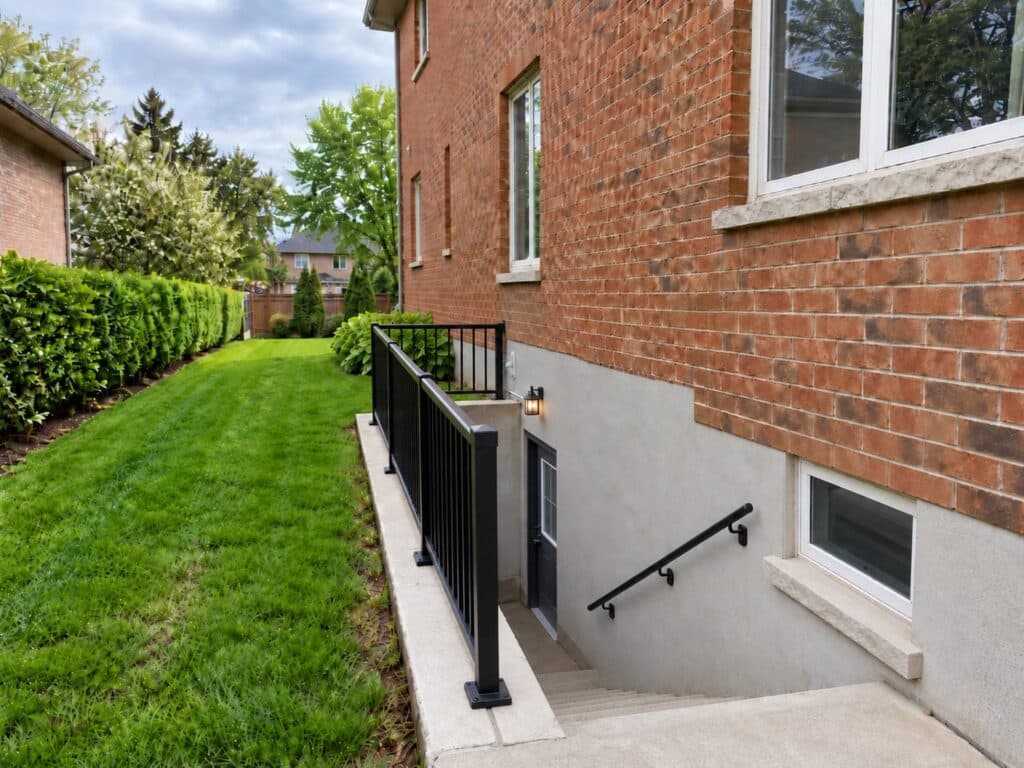
Does a Newmarket Basement Suite Need a Separate Entrance?
Finished Basement Without a Permit? Legalizing an Unpermitted Basement Renovation in Newmarket
Can You Put a Kitchen in Your Basement? Ontario Rules Explained
Basement Backwater Valve Flood Prevention: What It Really Costs in the GTA