
Basement Fire Separation In Basement Renovations: Drywall, Doors, And Safe Exits
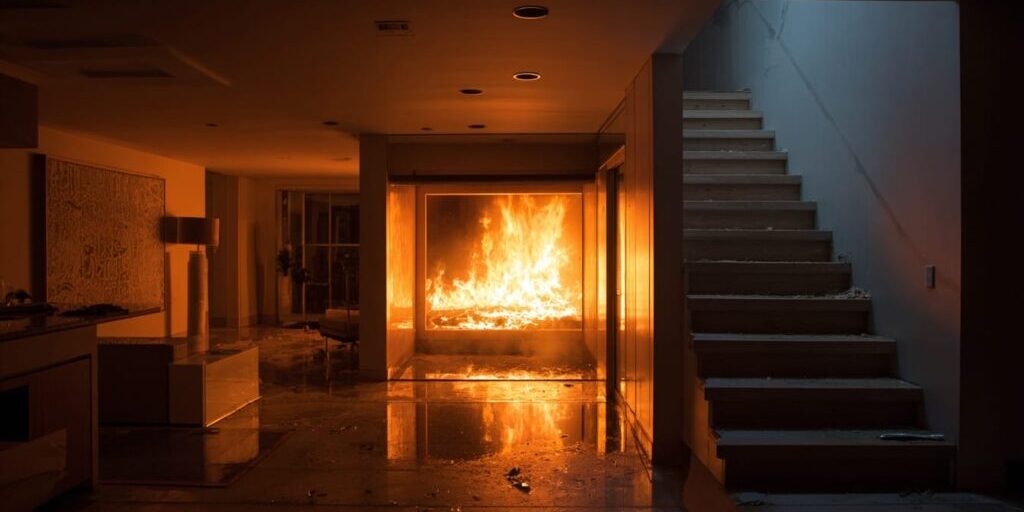
Basement fire separation is the part of a renovation you rarely notice, until it is missing. It is the set of layers and details that slow down fire and smoke, so you have time to get out. If you’re planning a finish, bedroom, or rental suite, this is one of the biggest “pass or fail” topics for safety and inspections.
If you want help planning a safe, inspection-ready basement, start with our basement renovation services.
This guide breaks the topic into three buckets you can actually use: drywall and ceiling assemblies, doors and closures, and safe exits. You’ll also get a practical checklist and a quick common weak points before you close the walls.
What “Basement Fire Separation” Actually Means
Fire separation is a continuous, tested assembly that slows the spread of fire and smoke between spaces for a defined period, giving occupants time to exit. In simple terms, it is the barrier system that buys you minutes when seconds matter.
It is also not one product. A “fire-rated” label on one material does not automatically create a compliant separation. The assembly, the joints, and the openings are what get scrutinized.
Here’s The Catch
Most basements do not fail on big surfaces. They fail at seams, holes, and shortcuts. The catch is that a fire separation is only as strong as its weakest opening. One unprotected penetration, one poorly chosen door, or one sloppy bulkhead detail can reduce the effectiveness of everything around it.
When It Matters Most In A Basement Renovation
This topic becomes critical when you add sleeping areas, change the stairs, or convert the space into a secondary suite. Those choices change the risk profile, and they often trigger tighter review during permits and inspections.
Even in a “simple” family basement, you still want a clear plan. It protects your family first, and it reduces expensive rework later if an inspector flags a detail after you’ve finished the space.
Drywall And Ceiling Assemblies That Protect The Separation

Regular Drywall Vs. Type X Drywall (What Homeowners Should Know)
Type X gypsum board shows up often in fire-resistance-rated assemblies. Homeowners hear “Type X” and assume it is always required. That’s not the right way to think about it.
What matters is whether the wall or ceiling is part of a required separation and what assembly approach is being used in your specific situation. Some details rely on multiple layers, specific fastening patterns, and continuity at transitions, not just one board choice.
The “Continuous Barrier” Rule Of Thumb
A useful rule of thumb is this: your separation has to stay continuous across the whole line you’re relying on. That means it cannot stop at a beam, disappear in a soffit, or get Swiss-cheesed by mechanical routes.
Basements are full of interruptions. Steel beams, duct trunks, bulkheads, and dropped ceilings create “easy” places to cut corners. Those are also the places inspectors look closely, because they are the places fire and smoke travel first.
Penetrations That Qietly Ruin A Fire Separation
Every hole you cut is a decision. Pot lights, speakers, electrical boxes, plumbing stacks, and duct penetrations can all weaken the assembly if they’re not planned and protected.
This is why the sequence matters. Plan penetrations before boarding, keep them minimal where you can, and treat every penetration like a potential failure point. If you’re unsure, your safest move is to confirm the accepted method with your designer, GC, or local building department before you close anything up.
Utility Rooms And Mechanical Areas
Mechanical rooms and utility zones often drive fire separation details in basements. They concentrate ignition sources, and they usually include multiple penetrations for gas, venting, electrical, and ducting.
A common mistake is treating the mechanical area like “unfinished storage” and skipping the same level of detail you apply elsewhere. If that area sits along a separation line, it still needs continuity, protected openings, and a plan for access panels that does not create a giant weak spot.
Soundproofing Vs. Fire Separation
Sound control and fire separation can overlap, but they are not the same goal. Soundproofing products can help with comfort, and some assemblies can improve both sound and fire resistance when designed correctly.
You cannot assume a “sound” product equals a “fire” solution. If you’re building toward a suite or adding bedrooms, treat fire separation as a primary requirement and layer sound goals on top of a compliant assembly, not the other way around.
If your end goal is a rental suite, the compliance layer gets thicker fast. Start by understanding the baseline expectations for suite conversions, then build your fire separation and exit plan from there.
Doors, Closures, And Why One Bad Door Can Undo Good Drywall

Where Basement Doors Typically Need More Attention
Doors are openings in your barrier. That makes them high leverage.
Basement projects commonly need a harder look at doors near the stair path, doors that separate utility areas, and doors used to separate a suite from the rest of the home. In many cases, the “door assembly” matters, not just the slab. That includes the frame, latching, and how tightly it closes.
Self-Closing Doors And Smoke Control
Smoke moves faster than flame. A door that reliably closes can slow smoke spread and keep an exit path usable longer.
Self-closing hardware is also one of those details that homeowners remove because it feels annoying day to day. If you need it for safety or compliance, removing it can quietly put you back at risk. A door that is propped open is not part of a separation anymore.
Common Basement Door Mistakes
The most common mistake is choosing an interior hollow-core door where a more robust door strategy is needed. The door looks fine, but it does not perform the job.
Other common issues are big gaps at the bottom, poor latching, and hardware that does not pull the door fully shut. These are small details with big impact, because the opening is where smoke and heat want to go first.
Safe Exits In A Basement Renovation

Fire Separation Is Not Your Exit Plan
Fire separation buys time. It does not guarantee you can get out.
Your exit plan is the route from where you are to a safe exterior. A good basement design treats fire separation and egress like a pair. One slows the hazard. The other gets you away from it.
Basement Stairs And Paths Of Travel
Most basements rely on the main stair as the primary exit route. That makes the stair zone and the path leading to it the “must work” part of the design.
Keep the path simple and predictable. Avoid pinch points, clutter-prone layouts, and door swings that create a trap. If you’re making layout changes, think about how someone moves through the space under stress, not how it looks in a rendering.
Basement Bedrooms And Emergency Escape Openings
Bedrooms in a basement raise the stakes because people are asleep and disoriented in emergencies. The expectation is that a bedroom has a realistic escape route if the main stairs are compromised.
This is where many projects get messy, because homeowners assume any small window counts. It often doesn’t, and the details depend on layout and local review. For a deeper breakdown of the intent and common requirements, use this guide: basement egress requirements.
If You’re Adding A Secondary Suite, Exits Get Stricter
Secondary suites raise the risk profile because more people live in the building, and escape routes can get shared or compromised. This is where you see problems like one unit needing to pass through another unit to exit, or exits that do not lead directly to ground level.
The City of Toronto summarizes common risk factors in two-unit houses, including issues with non-compliant means of escape and renovations done without required review. It’s a good “reality check” read if you’re planning a suite.
Basement Fire Separation Checklist Before You Close The Walls
Before drywall goes up, you have the most control and the least sunk cost. After drywall, every correction gets slower and more expensive.
Use this checklist as a planning tool. It won’t replace a permit review or an inspector, but it will keep you from missing the usual failure points.
- Confirm the intended use and layout (family space vs. bedroom vs. suite).
- Identify the separation lines (what is being separated from what).
- Choose a tested assembly approach, not a “best guess.”
- Keep drywall continuous through soffits and bulkheads.
- Plan penetrations before boarding (lighting, ducting, plumbing).
- Use an appropriate strategy for openings (doors, access panels).
- Photograph key stages for your records and inspections.
If you want the official Ontario references for code and guidance materials, start here, then confirm what applies with your municipality. https://www.ontario.ca/page/ontarios-building-code
The Most Common Fire Separation Failures We See In Basement Renos
“Looks Finished” But Fails Inspection
The most frustrating failures are the ones you can’t see when the project is done. A basement can look clean and still have hidden separation gaps behind bulkheads, inside ceiling drops, or around mechanical penetrations.
Another common issue is the “late change.” Homeowners add a pot light layout after drywall planning is complete, or shift a wall for a bigger room, and the separation line gets compromised without anyone noticing.
How To Avoid Rework
Sequence is your best friend. Plan the separation lines first, then frame, then rough-in, then board. If you do it backward, you will pay for it twice.
Also document your progress. Photos of key stages give you leverage when questions come up, and they make inspections smoother because you can show what is behind finished surfaces.
Permits And Inspections In The GTA

When You Typically Need Drawings And Permits
In most GTA municipalities, the need for a permit is tied to what you change, not how pretty the finishes are. Adding bedrooms, changing plumbing, altering structure, and creating a suite-like layout are common triggers.
If you’re unsure, don’t guess. This breakdown will help you understand the typical triggers before you commit to a scope.
What To Document For Smoother Inspections
A clean inspection is usually the result of clean documentation. Keep photos of framing, penetrations, and any key continuity details before closing the walls.
Also keep a simple scope summary: intended use, where bedrooms are, where the mechanical room is, and how exits work. That clarity prevents misunderstandings, especially if your project evolves during construction.
Renovate Your Basement With Fire Separation Built In
If you’re finishing a basement in the GTA, don’t leave fire separation to “whatever the drywall crew usually does.” Plan the separation lines, openings, and exits early, and you’ll avoid the expensive rework that shows up after inspection.
Yorkland Homes builds basements with a transparent pricing contract model and a detailed, meticulously planned build schedule. We’ve been family owned since 2010, and you can ask us about our on-time money back guarantee and Limited Liability Insurance. If you want a basement that’s comfortable, safe, and inspection-ready, talk to our finished basement specialists.
FAQs
Basement fire separation is a continuous barrier system that helps slow the spread of fire and smoke between spaces. It is built as an assembly, meaning the board, joints, penetrations, and openings all matter. The practical goal is time. A better separation gives occupants more time to exit safely.
Not always. Type X gypsum board is common in many fire-resistance-rated assemblies, but the correct approach depends on your layout and what needs to be separated. The safest approach is to treat the assembly as a system, not a single material choice, and confirm what your inspector expects before closing walls.
Fire separation focuses on resisting fire spread for a rated period of time. Smoke separation focuses on limiting smoke movement, which can become dangerous very quickly in enclosed spaces. In real basements, you usually need to think about both because smoke can block exit paths long before flame reaches you.
Sometimes. If a door protects an opening along a required separation line, the door strategy may need to be stronger than a typical interior door. Don’t treat it as a cosmetic choice. The door, frame, latch, and how well it closes can all affect performance.
They can. Any opening through a wall or ceiling can weaken a separation if it isn’t planned and protected properly. This is why lighting and AV plans should be part of your pre-drywall planning, not an afterthought.
Often, yes, but you need to be deliberate. Soundproofing goals can align with certain assemblies, but sound products do not automatically create a fire separation. Start with the safety requirement, then layer sound improvements on top in a way that keeps the separation continuous.
Fire separation buys you time by slowing spread. Exits are what you use to get out during that time. If you add bedrooms or a suite-like layout, exit planning should be reviewed early, because it can change window, stair, and layout decisions.
Check out more posts below...
Does a Newmarket Basement Suite Need a Separate Entrance?
Finished Basement Without a Permit? Legalizing an Unpermitted Basement Renovation in Newmarket
What Newmarket Basement Apartments Rent For and What Drives the Rate
Can You Put a Kitchen in Your Basement? Ontario Rules Explained
Basement Backwater Valve Flood Prevention: What It Really Costs in the GTA