
Basement Bathroom Rough-In: Plan Vents, Drains, And Layout Before You Renovate

A basement bathroom rough-in goes well when you solve drainage first, then venting, then ventilation, before framing locks anything in. Do that, and you avoid the two classic pain points: breaking concrete twice and opening finished walls later. If you want a coordinated plan from layout to inspections, start with our basement renovation services and we’ll map the rough-in to the rest of your basement build.
Here’s the catch. Most basement bathroom problems don’t show up on day one. They show up after you’ve tiled and painted, when a drain gurgles, a trap gets siphoned, or humidity creeps into the rest of the basement. This page is designed to help you prevent that outcome with a simple, inspection-ready plan.
What A Basement Bathroom Rough-In Actually Includes

A basement bathroom rough-in is not “just plumbing.” It’s the hidden infrastructure that decides whether your finished bathroom feels like a main-floor bathroom or like a utility space that happens to have tile. When you rough-in properly, the bathroom drains cleanly, vents correctly, stays dry, and stays serviceable.
Treat rough-in as a design phase, not a demolition phase. You’re choosing constraints and routes, then building around them. That’s why the smartest basement bathrooms start with a plan and measurements, not a sledgehammer.
Definition: Rough-In Means “Everything Hidden Behind The Finish”
Rough-in means everything you will not want to touch again once the room is finished. That includes drain lines under the slab or in the floor system, venting ties, water supply runs, shutoffs, and the bathroom fan duct route. It also includes the framing prep that makes those systems possible without ugly bulkheads.
Rough-in is also where inspection risk lives. The city and your trades need to confirm the hidden work before you close it up. If you skip that discipline, you increase the chance of rework, delays, and messy fixes.
A good rule: if it will be buried behind tile or drywall, treat it like a rough-in decision.
Rough-In Vs Finish Work: What You Lock In Early
Rough-in decisions set the skeleton of the bathroom. Toilet location, shower drain location, whether you can gravity-drain, and where vents will run are all early decisions. Fan duct routing and service access also belong in this bucket because they’re hard to “move later.”
Finish work is the skin. Vanity style, tile choice, lighting fixtures, mirrors, and paint colours can change later without a structural domino effect. You can swap a vanity. You can’t easily move a toilet flange once the slab is patched.
If you want flexibility later, invest your time now in the rough-in plan.
Start With Location And Constraints (Before You Touch Concrete)
The right basement bathroom layout is the one that respects your constraints. Basements hide constraints everywhere: beams, ducts, low headroom zones, and the location of your main plumbing stack. If you don’t map those first, you risk designing a bathroom that only works on paper.
Start with what you can’t change cheaply. That’s usually the stack location and the slab. Then work outward to the layout that gives you a clean drain path, a reasonable vent route, and a fan duct that actually exhausts outdoors.
This approach keeps your budget predictable and keeps your ceiling line cleaner.
Put The Bathroom Near The Stack If You Want Predictable Costs
Putting the basement bathroom near an existing stack usually reduces complexity. Shorter drain runs mean fewer slope problems. Shorter vent runs mean fewer awkward chases. You’re also less likely to run into structural conflicts that force expensive rerouting.
Distance matters because drains need slope, and slope takes vertical space. The farther you run a drain, the more headroom you lose or the more slab work you need to do. That’s why “just put it on the other side of the basement” often costs more than homeowners expect.
Before you commit, trace the stack location and confirm how you’ll get a drain line there without creating a low bulkhead that ruins the room.
Headroom And Floor Build-Up Can Kill A Layout
Basement bathrooms often feel tight because headroom is already constrained. Add a drain slope, a bulkhead, and a shower ceiling, and suddenly a “standard” layout feels cramped. This is especially true under ducts, beams, or stairs.
Plan your clearances early. Identify the lowest obstructions and sketch where the shower, vanity, and toilet will sit relative to them. A few inches can change whether the room feels comfortable or awkward.
Don’t design from a generic bathroom plan online. Design from your basement’s real geometry.
Plan Access For Shutoffs, Cleanouts, And Pumps
A serviceable basement bathroom stays calm over time. That’s because every critical system has a way to be accessed without tearing out finished walls. Shutoffs, cleanouts, and pump access are not “nice to have.” They’re the difference between a minor repair and a renovation.
Think about future you. If a valve fails, you want to reach it. If a cleanout is needed, you want it reachable. If a pump is installed, you want to service it without removing a vanity.
Build access into the layout and framing plan now, when it costs almost nothing.
Drains First: Gravity Vs Pump Is The Decision That Drives Everything

Drain strategy is the decision that ripples through the entire bathroom. It affects where the toilet can go, whether you need to cut slab, how much ceiling height you lose, and what the maintenance story looks like. If you pick the wrong drain strategy late, it usually forces redesign.
Solve drains first, then everything else becomes easier. Your venting plan becomes clearer. Your layout becomes realistic. Your timeline becomes calmer.
This is also where homeowners tend to get sold on shortcuts. Don’t buy a shortcut until you understand what it costs you in reliability.
When Gravity Drainage Works
Gravity drainage works when you can run a drain line downhill to the main building drain with enough slope, without raising floors in a way that creates awkward transitions. In practical terms, that depends on the elevation of your building drain, the distance to the stack, and what’s in the way.
When gravity works, it’s usually the simplest long-term solution. Fewer moving parts. Less maintenance complexity. Fewer noise concerns. It also typically integrates cleanly into the renovation.
The smart move is to confirm elevations and routing before you assume gravity will work. “It should work” is not a plan.
When You Need A Sewage Ejector Pump
You need a sewage ejector pump when gravity can’t carry waste to the main drain. That’s common in basements where the fixtures sit below the level of the building drain. In that case, the pump lifts waste up to the main line.
A pump system changes your planning. You need space for the basin, a route for discharge piping, power for the pump, and a plan for venting and sound control. You also need to plan access for maintenance, because pumps are mechanical equipment.
Planned early, a pump system can be tidy and reliable. Planned late, it can force ugly routing and boxed-in equipment.
Macerating Toilets: When They Make Sense
Macerating toilets can make sense in specific situations where you want to minimize slab cutting and the layout constraints are tight. They grind waste and pump it through smaller-diameter piping, which can reduce demolition in some cases.
The trade-offs are real. They can be noisier. They can be more sensitive to what gets flushed. They can create a maintenance story that some homeowners don’t want in a primary living space. They also don’t eliminate the need for good planning.
Treat macerating systems as a niche tool, not the default. Use them because they fit your constraints, not because you’re avoiding design work.
Plumbing Venting: Not The Same Thing As Bathroom Exhaust
Homeowners often mix up two very different systems: plumbing vents and bathroom exhaust fans. They serve different purposes, and you usually need both. Confusing them creates the classic basement bathroom symptoms: slow drains, gurgling, sewer smells, and persistent moisture.
Plumbing venting protects the drains. Exhaust protects the room’s air. One does not replace the other.
If your contractor can’t clearly explain both, pause before framing starts.
Plumbing Vents Protect Traps And Prevent Sewer Gas
Plumbing vents stabilize pressure in the drain system. They help drains flow properly and prevent traps from being siphoned. When a trap loses its water seal, sewer gas can enter the room, and the smell often shows up after the bathroom has been finished for a while.
In basements, vent routing can be tricky because you’re working around joists, beams, and existing mechanical runs. That’s exactly why you plan it early. If you leave venting as a “later” problem, you often end up with compromises that cause long-term annoyance.
Keep this high-level but strict: venting needs to be designed and executed properly. Basement bathrooms punish improvisation.
Exhaust Fans Remove Humidity (And Save Your Finishes)
The exhaust fan’s job is to remove moisture and odours from the room. In a basement, this matters even more because the air is typically cooler and dries slower. A steamy basement bathroom can raise humidity for the entire level if you don’t manage airflow well.
Fan planning includes duct routing and exterior termination. Short, direct duct runs work best. Long, twisty runs collect condensation and perform poorly. That’s why fan planning belongs in the rough-in phase, not after drywall.
If you want a broader basement air plan beyond the bathroom, our guide on basement humidity and air quality will help you connect the dots between ventilation, comfort, and finish durability.
Common Venting Mistakes That Cause Rework
The most common mistakes are predictable: no clean vent route, a vent that gets boxed in without access, or treating the exhaust fan as if it handles plumbing venting. Another common issue is creating a vent route that conflicts with structure or mechanicals, then “solving it” with awkward bulkheads.
The cost of venting mistakes is usually rework. You either open walls to fix it, or you live with slow drains and smells. Neither is a win.
The fix is straightforward: confirm vent routes on drawings, confirm how they’ll be built, and confirm service access before framing.
Water Supply Rough-Ins: Clean Runs, Shutoffs, And Future Service
Water supply rough-in decisions don’t get the same attention as drains, but they should. Poor supply planning creates leak risk, long wait times for hot water, and shutoffs you can’t reach. Good supply planning makes the bathroom feel like it belongs in the house.
Focus on straight runs and accessible control points. Basements are full of built-ins and storage plans. Don’t route plumbing where future screws, shelves, or cabinetry will want to live.
Also think about the future. Basements change. A storage room becomes a gym. A gym becomes a bedroom. Service access stays valuable in every version.
Route Hot And Cold Lines For Straight Runs And Fewer Fittings
Every fitting is a potential leak point. That doesn’t mean fittings are bad. It means you should avoid unnecessary complexity. Straight runs, clean turns, and thoughtful routes make future troubleshooting easier and reduce the chances of hidden issues.
Plan supply routes with framing in mind. If a stud bay will be stuffed with plumbing, insulation coverage can suffer and sound can travel more easily. You want a clean, organized wall cavity that stays easy to understand.
When you route supplies cleanly, you also reduce the need for patchwork access panels later.
Shutoffs And Access Panels Are Not Optional In Basements
Basement bathrooms benefit from local shutoffs for vanity supplies, shower valves, and any pump-related equipment. If something fails, you want to isolate the problem without shutting down the whole house. That’s especially important in a basement that’s used daily.
Access panels are not ugly when they’re planned. They’re ugly when they’re an emergency. Plan them into closets, behind removable trim, or in mechanical areas where they make sense.
If a contractor tells you “we never need access,” that’s a contractor who hasn’t had to service their own work.
Hot Water Capacity: Basement Bathrooms Change Demand
Adding a basement shower changes hot water demand. It can also increase recovery pressure on your water heater if the basement becomes a regular-use space. Even if the heater is adequate, long pipe runs can mean long waits, which frustrates homeowners.
You don’t need to over-engineer this. You do need to confirm capacity and delivery distance. If hot water takes forever to arrive, the bathroom feels like an afterthought.
This is one more reason to plan early. It’s easier to adjust routes and decisions before walls are closed.
Electrical And Lighting Rough-Ins: Plan It Like A Main-Floor Bathroom
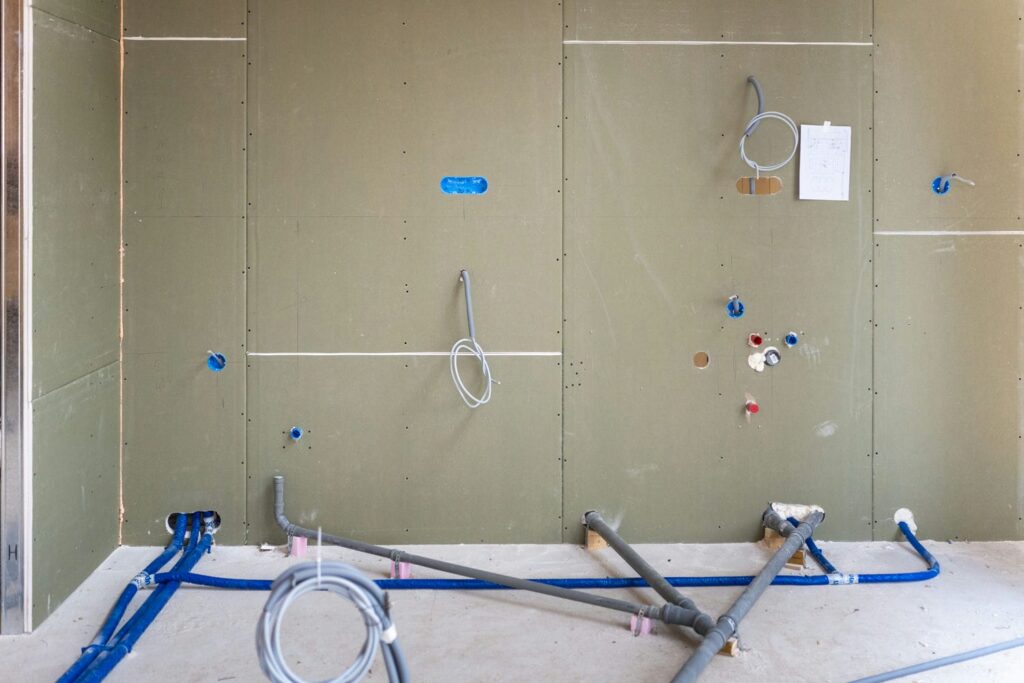
Basement bathrooms deserve the same electrical planning as any other bathroom. Poor planning leads to awkward outlet placement, weak lighting, and fans that don’t work the way you expect. Good planning makes the space feel finished and intentional.
Treat lighting and electrical as part of the comfort plan. Moisture control, safe outlets, and good task lighting are functional essentials, not upgrades.
Also coordinate early. Electrical changes are cheap before drywall and expensive after.
Dedicated Circuits And GFCI Planning
Bathrooms have specific electrical requirements, and you should use licensed professionals for electrical work. From a planning standpoint, you want to decide outlet locations, GFCI placement, and any dedicated needs like heated floors or specialty lighting before framing gets busy.
Even if you’re keeping the bathroom simple, basic planning matters. Put outlets where you’ll actually use them. Keep them clear of splash zones. Plan fan wiring and switching so the bathroom is easy to live with.
A clean electrical rough-in reduces clutter, reduces future “why did they do this” frustration, and supports inspection-ready work.
Fan, Vanity, Shower, And Feature Lighting Locations
Lighting defines how the bathroom feels. A basement bathroom with harsh overhead lighting feels cold. A bathroom with layered light feels calm and usable. Plan for task lighting at the mirror, a comfortable ambient source, and any shower lighting you want.
Switching matters too. Think about the path you take when you enter the room. Put controls where they feel natural. If you want a mirror with integrated lighting or smart controls, rough-in is when you make that easy.
The goal is simple: the basement bathroom should not feel like a secondary space.
Framing And Sound Control Around Pipes
Sound is one of the biggest giveaways that a basement bathroom was an afterthought. Drain noise travels through framing. Pump systems can add hum. If you don’t plan for sound control, the bathroom can be audible throughout the basement.
Good framing helps sound control because it creates straight runs, proper cavities for insulation, and predictable chases. Bad framing forces tight chases that can’t be insulated and transmit sound.
Treat sound control as part of rough-in, not part of decor.
Frame For Straight Runs And Full Insulation Coverage
Straight runs reduce the need for chaotic bulkheads and tight corners. When you plan chases properly, you can insulate around plumbing and maintain consistent wall performance. That supports comfort and reduces noise at the same time.
Basements often force compromises around ducts and beams. The way you handle those compromises matters. Plan chases intentionally, keep them serviceable, and avoid boxing systems in permanently.
When framing is clean, the rest of the build becomes easier for every trade.
Reduce Drain Noise With The Right Assemblies
Drain noise is mostly a path problem. Sound travels through hard connections and through unsealed gaps. You reduce it by insulating cavities, sealing penetrations, and avoiding rigid, continuous paths that transmit vibration.
You don’t need to turn a basement bathroom into a recording studio. You do need to choose assemblies that respect the fact that basements are close-quarters spaces where noise is noticeable. Thoughtful chase design and targeted sound control details make a big difference.
If you want deeper options for sound control across the whole basement, our basement soundproofing guide covers practical techniques that reduce transfer between rooms and levels.
Permits And Inspections: Put Them In The Schedule Early
A basement bathroom often triggers permits because you’re adding plumbing fixtures, drains, and sometimes structural or electrical work. Requirements vary across the GTA, so treat this as a confirmation step, not an assumption. The worst time to discover a permit requirement is after the slab is patched and the walls are framed.
Use your municipality’s guidance and confirm early. If you’re in Toronto, the city’s permit page provides a public reference point for when permits are required.
Plan permits like you plan materials. They affect schedule and inspection timing. That means they affect cost.
When A Basement Bathroom Typically Triggers Permits
In most cases, adding a new bathroom in a basement involves plumbing work that requires proper permitting and inspections. If you’re cutting into concrete, modifying drains, adding a new shower, or changing electrical, expect the scope to matter. Different municipalities interpret and enforce details differently, so you should confirm locally.
Don’t treat permits as red tape. Treat them as a sequence driver. When you know what needs to be inspected, you can plan rough-in milestones and keep your project moving.
If you’re unsure, start with the municipality’s guidance and then ask your contractor to explain how they coordinate the permit and inspection path.
Inspection Holds: Rough-In Is A Stop Point Before Drywall
Inspections exist because rough-in work is hidden work. Once you drywall, tile, and paint, fixing errors becomes expensive. A clean schedule includes an inspection hold after plumbing and electrical rough-ins and before walls are closed.
This is where many basement projects get messy. The project feels “ready to close,” so people rush. Then an inspection issue forces rework. That’s avoidable when the schedule is designed around inspection holds, not around wishful timing.
Don’t Duplicate The Permit Rabbit Hole
This post isn’t a full permit guide, and it shouldn’t be. Permit triggers and requirements change by scope and municipality. If you want a dedicated breakdown of basement permit considerations, we keep that content in a separate guide so you can go deeper without cluttering your rough-in plan.
Drainage Options Compared
Use this table to pick your drainage approach before you finalize layout and start breaking concrete.
| Drainage Approach | Best For | Watch-Outs |
| Gravity Tie-In To Existing Building Drain | Bathrooms located near the stack with workable elevations and routing | Slope and headroom constraints can force bulkheads or slab work |
| Sewage Ejector Pump System | Bathrooms below the building drain elevation where gravity is not feasible | Needs space, power, venting coordination, and service access. Can add noise if not planned |
| Macerating Toilet System | Niche cases where slab cutting must be minimized and loads are modest | Noise, limitations, and long-term service considerations. Not ideal as a default |
Step-By-Step: A Clean Basement Bathroom Rough-In Sequence
A clean rough-in sequence keeps you from rebuilding work twice. It also keeps trades aligned, which matters in basements where space is tight and work overlaps quickly. Follow the steps below and you’ll avoid the common “we should have planned this earlier” moments.
This sequence is designed for typical GTA basement builds. Adjust details with your licensed trades, but keep the order.
1) Confirm Layout, Stack Location, And Drain Strategy
Confirm where the stack is and whether gravity drainage is realistic before you commit to a layout. Map beam and duct conflicts and decide where chases will go. This is the moment to measure, not guess.
Lock the drain strategy first because everything else depends on it. If you need a pump system, it affects layout, sound control, and service access. If gravity works, protect the slope path and avoid headroom surprises.
Once the drain decision is made, the rest of the bathroom becomes straightforward planning instead of constant compromise.
2) Plan Vent Paths And Fan Duct Route Before Framing
Separate plumbing venting from bathroom exhaust in your plan. Decide where plumbing vents will tie in and where the fan duct will run to an exterior termination. Keep routes clean and serviceable.
Do not frame first and “find a route later.” That’s how you end up with ugly bulkheads and boxed-in systems. Plan the routes, then frame to support them.
This step also reduces inspection risk because your vent plan becomes visible and verifiable before walls close.
3) Rough-In Drains And Supplies (Then Pressure/Test As Required)
Install drain rough-ins first, then run supply lines, then complete vent ties. Keep cleanouts accessible and plan shutoffs intentionally. Leave yourself service points where future you will actually be grateful.
Treat testing and inspection readiness as a milestone. If your rough-in work needs to be tested, do it while it’s accessible. That’s cheaper and faster than testing after finishes are partially installed.
Good rough-in work looks boring. Straight lines. Clean routes. No mystery connections.
4) Rough-In Electrical And Fan Wiring
Plan outlets, lighting, fan wiring, and any extras like heated floors before drywall. Coordinate electrical rough-ins with framing so fixtures land where they should. Small shifts now prevent awkward placements later.
Use licensed trades and keep things code-compliant. Your job as the homeowner is to decide locations and function. Their job is to execute safely and correctly. That partnership works best when decisions are made early.
A basement bathroom should feel intentional. Electrical rough-in is a big part of that.
5) Call Inspection, Then Close Walls With Confidence
Schedule inspections before insulation and drywall. Keep assemblies visible until the inspector signs off. Take photos and keep notes while walls are open so you have an “as-built” record of shutoffs, vent routes, and service points.
Once inspection is complete, close walls and move into finishes without guessing what’s behind them. This is where the project shifts from infrastructure to aesthetics.
If you follow this sequence, your finishes become a reward, not a cover-up.
Common Rough-In Mistakes
Basement bathroom rough-ins fail in predictable ways. They fail when the layout ignores drain elevations, when venting is treated as optional, and when access is sacrificed for a cleaner look. Those failures cost money because they require opening finished work.
Use the mistakes below as a quick audit of your plan. If any of them apply, fix them before framing starts.
Designing A Bathroom Without Confirming Drain Elevations
This mistake shows up as a late surprise: gravity won’t work, slopes don’t fit, or the drain route forces a bulkhead that ruins headroom. Homeowners often discover it after framing has already locked the layout.
The fix is to confirm elevations early. Make the drainage decision based on reality, not optimism. If a pump system is needed, plan it properly with access and sound control, not as an emergency addition.
This one step protects both your budget and your ceiling line.
Treating Venting As A “Later Problem”
Venting problems don’t show immediately. They show up as slow drains, gurgling, and odours after the bathroom has been lived in. By then, the fix may require opening finished walls or ceilings.
The fix is to plan vent routes on drawings and confirm how they’ll be built. Keep venting in the rough-in scope, not in the “we’ll see” scope. Separate plumbing venting from exhaust and make both explicit.
If venting is unclear, pause the build. It’s cheaper than fixing it later.
Forgetting Service Access
Service access gets sacrificed when people want clean walls and tight layouts. Then a valve needs servicing, a cleanout is needed, or a pump needs attention, and you’re cutting drywall to reach something that should have been planned.
The fix is to choose access points intentionally. Put them where they’re discreet but reachable. Document locations and take photos before walls close.
Basement bathrooms last longer when they’re designed to be maintained.
Underestimating Bathroom Humidity In A Basement
Basements dry slower. That means a basement bathroom can raise humidity across the whole level if ventilation is weak or duct routing is poor. Over time, that can affect paint, trim, and even adjacent storage areas.
The fix is to plan exhaust properly and consider the basement as a system. Humidity planning is not overkill. It’s what makes the basement feel finished.
Plan The Rough-In Right, And The Bathroom Just Works
A basement bathroom feels effortless when the rough-in is planned around drainage, venting, ventilation, and service access. Do it in the right order, and you avoid the costly fixes that show up after the tile is already in. If you want a basement bathroom that functions like it belongs in the house, we can help you design it first and build it with a clear scope.
Yorkland Homes uses a transparent pricing contract model and a detailed build schedule you can track, and we’ve been family owned since 2010. Ask us about our on-time money back guarantee when you’re comparing timelines and accountability. If you’re ready to plan your basement bathroom within a full basement build, hire us as your trusted basement renovation contractor.
Frequently Asked Questions
A basement bathroom rough-in typically includes drain lines, venting connections, water supply lines, shutoffs, and the exhaust fan duct route. It also includes framing prep and access planning so these systems can be inspected and serviced later.
Think of rough-in as the hidden decisions. If it’s behind drywall or tile, it belongs in the rough-in plan. That’s why the best time to solve rough-in is before framing and drywall make changes expensive.
Sometimes, but it depends on your drain elevations and layout. If you can route drains through existing pathways or use a system that avoids major slab cutting, you may reduce concrete work. In many cases, though, tying into the main drain properly requires some slab work.
Avoid choosing an approach based only on demolition fear. A clean, well-planned concrete cut and patch can be less disruptive than choosing a workaround you regret later.
You typically need a sewage ejector pump when the basement fixtures sit below the building drain elevation and gravity can’t move waste to the main line. In that case, the pump lifts waste up to the appropriate tie-in point.
Planned early, a pump system can be quiet and unobtrusive. Planned late, it can force awkward routing and poor access. If a pump is likely, choose the location and access strategy before you frame.
Yes, they serve different purposes. Plumbing venting protects drain function and prevents trap siphoning and odours. The exhaust fan removes humidity and odours from the room. One does not replace the other.
Most basement bathroom headaches come from mixing these up or leaving one vague. Plan both routes early, then frame and rough-in around those decisions. Clear planning prevents gurgling drains and clammy rooms.
Often, yes, but requirements vary by municipality and scope. Adding plumbing fixtures, cutting into concrete, and changing drains commonly trigger permit and inspection requirements. Confirm with your local municipality early rather than guessing. Use permits as a schedule driver, not as a last-minute surprise.
Sewer smells usually point to trap or venting issues. Proper venting helps traps keep their water seal, and good installation prevents pressure fluctuations that pull water out of traps. Correct drain slopes and cleanouts also help keep the system working reliably.
Don’t try to mask smells with stronger fans or air fresheners. Fix the cause. It’s almost always a rough-in decision that’s easier to solve before walls close. If you smell sewer gas, treat it as a signal, not as a nuisance.
In most basement renovations, the rough-in stage is the key inspection point before drywall. That can include plumbing rough-ins, venting, electrical rough-ins, and any structural changes. The exact inspection path depends on your municipality and project scope.
Build your schedule around inspection holds. That’s how you avoid opening finished walls later. If you want a full basement sequence that shows how rough-in fits into the overall build, use this step-by-step basement process guide. Inspections feel slower only when you don’t plan for them.
Check out more posts below...
Basement Backwater Valve Flood Prevention: What It Really Costs in the GTA
In-Law Suite Vs. Legal Rental In Newmarket: Which Fits?
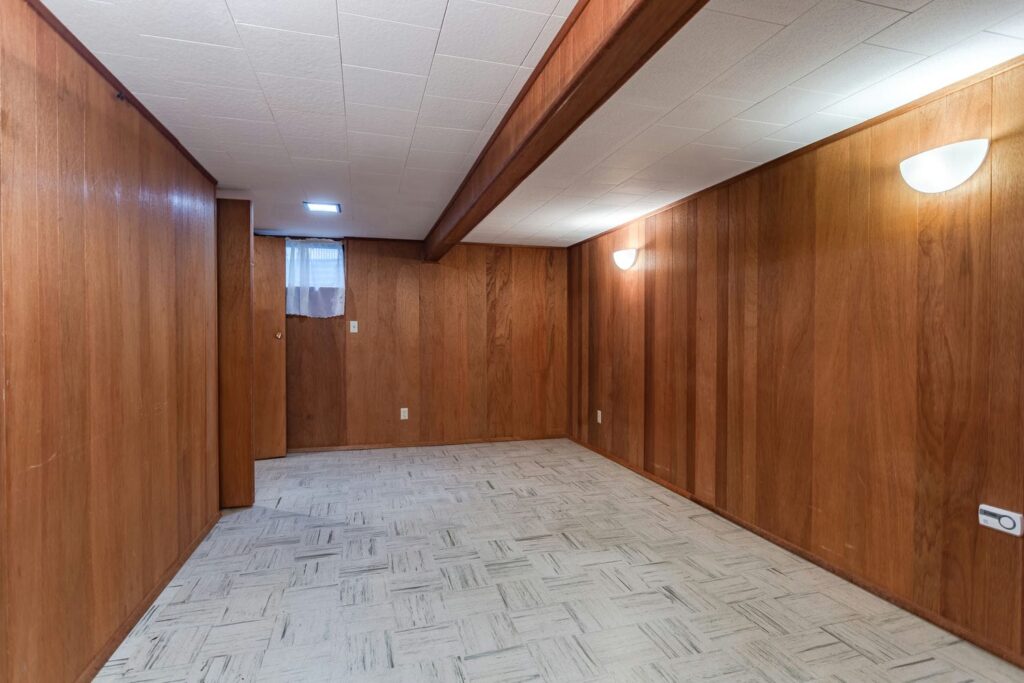
Why Older Newmarket Basements Often Need Underpinning
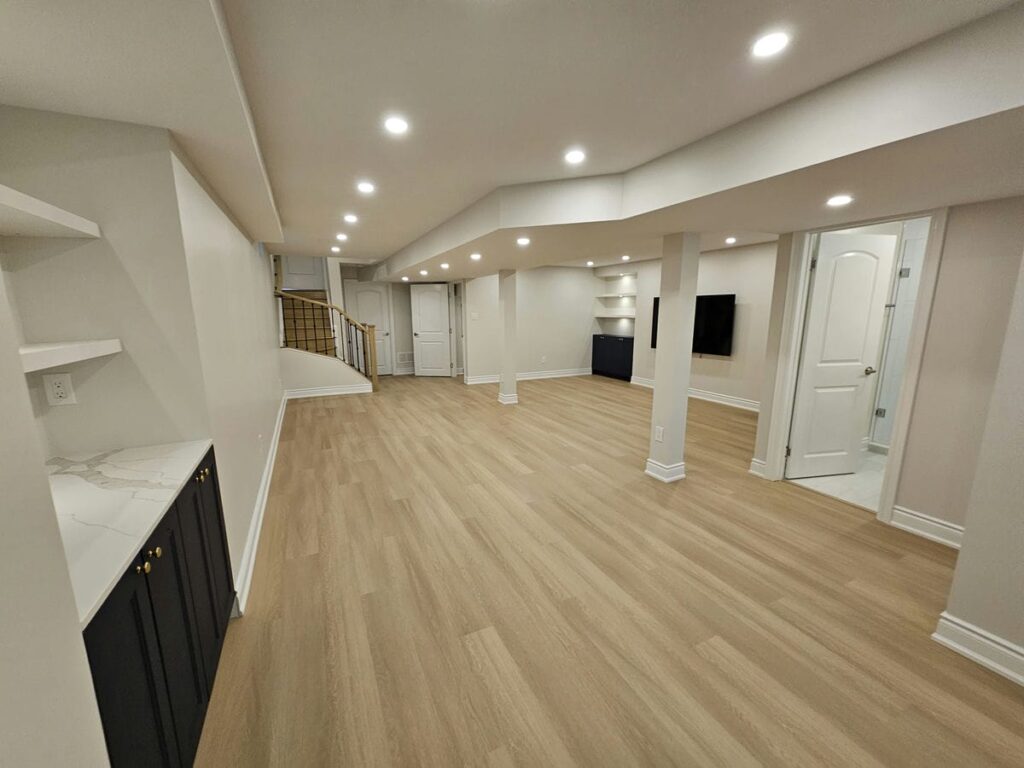
What Newmarket Requires To Register A Basement Suite
