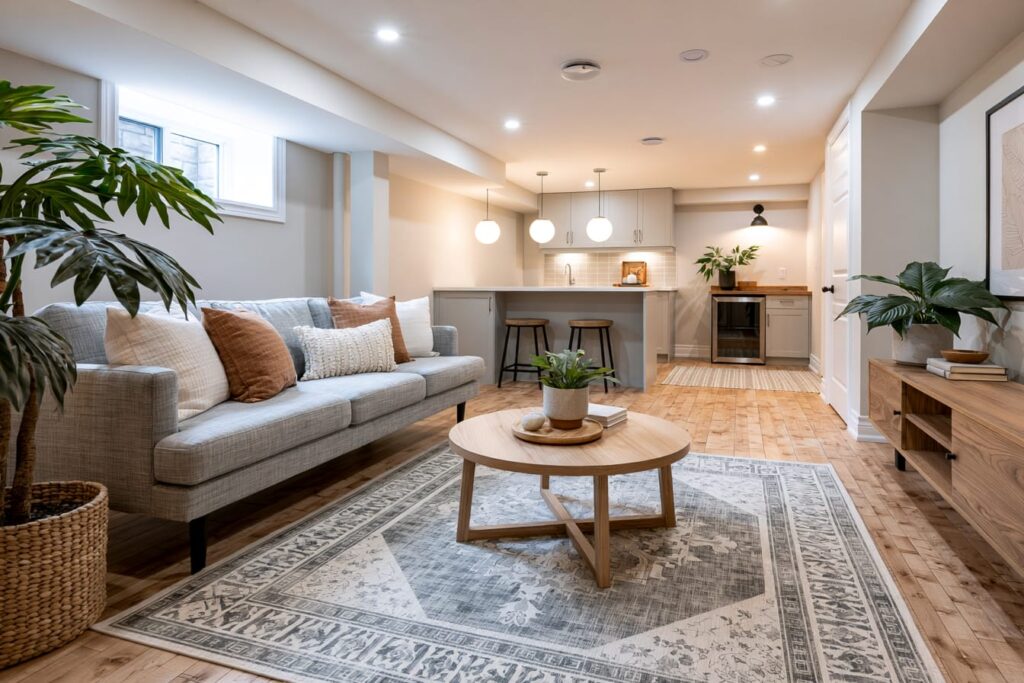
Is Radiant Floor Heating Worth It In Basement Renovations?

Radiant floor heating can be worth it in a basement when you use the space every day, you hate cold floors, and you plan the floor build-up early. It is less compelling if the basement is storage, ceiling height is tight, or you cannot fix moisture and insulation first. If you are still scoping options, our basement renovation services can guide you through the entire process..
What Radiant Floor Heating Really Does In A Basement
Radiant heat changes how the room feels because it warms the surfaces you touch and stand on, not just the air. In basements, that matters more than upstairs. Concrete stays cool, and cool floors make the whole space feel unfinished, even when the drywall and lighting look great.
That said, “feels good” is not the same as “works well.” The performance comes from planning: insulation, moisture control, and a floor assembly that does not steal headroom or fight your final flooring choice.
What is Radiant Flooring?
Radiant floor heating is a system that delivers heat through the floor, creating more even, draft-free comfort. In a basement renovation, it’s typically installed either as electric heat mats/cables or hydronic tubing (hot water running through pipes).
Both options can work. The right one depends on how much floor you want to heat, how you plan to control zones, and how your basement mechanical layout is being built.
What It Does Not Fix
Radiant floor heating does not fix a damp basement, a cold slab with no insulation plan, or a layout that leaks heat into unconditioned areas. If you skip the prep, you can pay for a system that runs often but still feels underwhelming at your feet.
Here’s the catch: basements fail quietly. You can finish everything, move furniture in, and still feel that “cold floor” effect because the slab is pulling heat away and humidity is dragging down comfort.
The Quick “Worth It” Checklist
Before you choose a system, decide what problem you are actually solving. Most homeowners say “cold floors,” but the root cause is often a mix of slab temperature, insulation, and air moisture. If you name the real problem, you can spend in the right place.
Use the checks below like a go or no-go filter. If you are forcing “yes” on half of them, you will likely regret the upgrade.
Worth It When These Are True
Radiant is usually worth it when the basement is true living space and you want it to feel finished year-round. It also shines when you are already rebuilding the floor (levelling, subfloor work, drainage upgrades), because the incremental effort is lower.
It’s also a strong choice when you are installing tile, since tile transfers heat well and stays comfortable underfoot longer after the system cycles off.
Skip It (Or Limit It) When These Are True
If ceiling height is tight, radiant can become a trade-off you feel every day. Floor build-up affects stairs, doors, and headroom under bulkheads. A “small” thickness change on paper can turn into awkward transitions in real life.
Also be cautious if the basement has unresolved dampness. You can improve comfort, but you still need to solve the basement fundamentals first, or you will be paying to fight physics.
The Biggest Constraint: Floor Height And Build-Up

Most “radiant regrets” come from one thing: the floor assembly was an afterthought. Basements are unforgiving because you can’t easily steal height from above, and you don’t want to create tripping hazards at every doorway.
If you plan radiant early, you can control the build-up, choose the right transitions, and avoid rework. If you add it late, you end up making compromises in flooring, stairs, or ceiling clearance.
Where The Height Goes
Floor height disappears layer by layer. Even if your heating system is thin, the full build-up includes the prep and the finish layers too. A typical stack can include:
- levelling or smoothing compound
- insulation or thermal break (if used)
- heating mat/cable or tubing system
- setting bed or mortar
- finished flooring (tile, vinyl, engineered wood)
The practical takeaway is simple: you need to lock the floor thickness before you finalize stair height, door clearances, and any basement bathroom rough-ins.
Uneven Slabs Make Everything Harder
An uneven slab can turn radiant into a problem instead of an upgrade. You can’t “cheat” flatness when you want good tile results, and you also need consistent contact for predictable heat transfer. That’s why levelling is not cosmetic. It’s performance and durability.
If you suspect the slab is out of level, start with the right diagnosis and plan. This is exactly why we wrote a guide on how to fix uneven basement floors during a renovation.
Flooring Compatibility: Tile, Vinyl, Engineered Wood, And Carpet
Flooring choice is where radiant either becomes a smart comfort upgrade or an expensive compromise. Some floors move heat efficiently. Others insulate it. Some tolerate temperature swings. Others do not.
You don’t need to guess. You need to match the floor to the system and then build the assembly around manufacturer limits and real basement conditions.
Tile Is Usually The Best Match
Tile is usually the best-performing floor over radiant heat. It transfers heat well, it does not trap heat the way carpet does, and it holds warmth longer than many floating floors. In a basement, that “warm surface” feeling is the whole point.
Tile also makes zoning practical. You can heat smaller areas like a bathroom, entry zone, or bar area without trying to warm the entire basement slab.
Tile Installation Details That Protect You Long-Term
Radiant under tile is not just “install heat, then tile.” The details that protect you include movement management, proper underlayment choices, clean transitions, and a layout that avoids stress points. When these details get rushed, you can end up with cracked grout, hollow spots, or tile lippage that never feels right.
If you want tile-specific guidance on compatibility, layout, and install sequencing, loop in a local tile contractor early so your heating plan and tile plan work together instead of fighting each other.
Vinyl Plank And Engineered Wood Can Work, But Read The Limits
Vinyl plank and engineered wood can work over radiant, but they come with tighter rules. Manufacturers often set maximum surface temperatures and specific underlayment requirements. If you ignore those, you risk warping, gapping, or warranty issues.
Basements can fluctuate more than upstairs spaces. Stable humidity and stable temperature control matter more when you choose a floating floor over radiant.
Carpet Is The Least Efficient Option
Carpet acts like insulation over your heating system. That can be fine if your goal is “soft and warm,” but it reduces heat transfer and can make the system feel weaker than it is. You end up running it longer to get the same comfort.
If you want carpet in a basement, consider limiting radiant to zones where the benefit is obvious, like a tiled bathroom floor, then use a different heating approach for the larger carpeted areas.
Basements Are Different: Insulation And Moisture Decide The Outcome
Radiant heat is a comfort system, but basements are building-science projects. If you treat the basement like “just another floor,” you can miss the issues that decide whether the room feels warm or clammy.
The best radiant outcomes happen when insulation and moisture control come first. The heating system is the final comfort layer, not the fix for a struggling basement.
Insulation Is Not Optional If You Want Radiant To Feel “Worth It”
If heat can escape downward into the slab, it will. That is why insulation strategy matters. You want the system to push comfort upward into the room, not dump energy into cold concrete and soil.
If you want the plain-language version of what to prioritize, start with our basement insulation strategy guide and use it to pressure-test your radiant plan.
Humidity Changes Comfort More Than Most People Expect
Humidity changes how warm a basement feels at the same thermostat setting. Damp air feels cooler, and basements tend to trap moisture unless ventilation and dehumidification are handled properly. That is why some basements feel cold even when the heating is “working.”
If you are trying to make radiant feel like a premium upgrade, treat humidity like a core part of the plan. This guide on how to manage humidity and air quality is a good starting point.
Electric Vs Hydronic Radiant For Basement Renovations
Electric and hydronic radiant can both work in basements, but they solve different problems. The right choice is less about what is “better” and more about what fits your basement size, zoning needs, and mechanical plan.
Don’t decide based on a single feature like “cheaper to install.” Decide based on total effort, control, and how you will actually use the space.
Electric Radiant (Mats/Cables)
Electric radiant is usually the simpler choice for small-to-mid zones. It fits well in basement bathrooms, bar areas, or a cold seating zone where warm floors make a big difference. It also simplifies zoning because each area can often be controlled independently.
Operating cost depends on how long you run it, how well the basement holds heat, and your electricity rates. If you treat it like “all day heat” without insulation planning, you can be disappointed.
Hydronic Radiant (Hot Water Tubing)
Hydronic radiant is typically better suited to larger coverage, especially if you want the whole basement warmed evenly and you have a clear mechanical plan. It can also integrate into broader heating strategies in some homes, depending on the equipment you already have.
The trade-off is coordination. Hydronic systems demand more planning around mechanical space, controls, and sequencing with other trades. If you want it, commit to designing it early.
Planning And Sequencing: Where Radiant Fits In The Build Schedule
Radiant doesn’t fail because the system is “bad.” It fails because the build sequence is wrong. If you install it before moisture and levelling are handled, you lock problems under the floor where they are expensive to fix.
A good plan keeps testing and documentation in the schedule. You want proof the system works before you bury it under finished flooring.
The Typical Order Of Work
Here is a practical sequencing checklist you can use with any contractor:
- Handle moisture risks first (water entry, vapour strategy, drainage where needed).
- Confirm floor flatness and lock a levelling plan before finishes.
- Finalize the floor assembly thickness so stairs and doors stay correct.
- Install the heating system and test it before you cover it.
- Install the finished flooring, then commission controls and sensors.
This is also where schedule discipline matters. If the project runs late, radiant often gets rushed. That’s when the details that prevent cracks, bad transitions, and poor performance get missed.
Permits And Inspections: Don’t Wing It
Depending on scope, your basement renovation may trigger permits, inspections, or trade sign-offs. Heating systems can intersect with electrical work, plumbing, or mechanical changes, so you want to confirm requirements early, not after rough-ins are complete.
If you want a clear local baseline, start with our guide on basement renovation permits and use it to shape your questions before you commit to a heating system.
For an authoritative reference point, the City of Toronto outlines when a building permit is required and what triggers an application. Use it to understand the “why” behind permit questions, even if you live elsewhere in the GTA.
So, Is Radiant Floor Heating Worth It?
If you want the short version: radiant is worth it when it’s designed as part of the basement, not attached at the end. The comfort improvement is real, but only when the basement fundamentals support it.
Below are three common scenarios we see in the GTA, with the most practical recommendation for each.
If You Want A True Living Space
If your basement is becoming a family room, gym, or bedroom, radiant can be a strong upgrade. You get the most benefit because you’re there often, and the “cold floor” problem is a daily annoyance.
In this scenario, the ROI is not just resale. It is use. The space feels finished in winter, not just “finished on paper.”
If You Only Need Comfort In One Or Two Spots
If your goal is warm floors in a bathroom or a single seating area, zone heating is usually the smart play. You get the comfort where it matters without building up the entire basement floor or paying to heat areas you rarely use.
This approach also protects you when ceiling height is marginal. You can keep transitions cleaner and reduce the number of details that can go wrong.
If Budget Or Ceiling Height Is Tight
If you are squeezing the basement into a tight budget or you are already fighting headroom, prioritize the basics first. Moisture control, insulation, and a sensible heating plan often deliver more comfort per dollar than full-floor radiant.
You can still get warm-floor comfort by heating a small tiled zone. The key is not letting radiant force compromises that make the basement feel cramped.
Level Up Your Basement With Yorkland Homes
Radiant floor heating is one of those upgrades that feels amazing when it’s planned early and frustrating when it’s bolted on late. If you want a basement that feels warm, comfortable, and consistent, the smartest next step is to map your floor assembly, moisture plan, and zoning before finishes begin.
Yorkland Homes can help you do that with a transparent pricing contract model and a detailed, meticulously planned build schedule. We’re a family-owned business since 2010, and you can ask us about our On-time money back guarantee and Limited Liability Insurance when you’re comparing contractors. If you want to see how we scope basements from the ground up, reach out to our finished basement specialists.
Frequently Asked Questions
Yes, when the basement is real living space and the floor assembly is planned properly. The upgrade is mostly about daily comfort, not a quick resale trick. If you use the basement often, warm floors change how the entire room feels.
Electric radiant usually fits smaller zones and simpler retrofits. Hydronic radiant can make more sense when you want broader coverage and you’re already building a coordinated mechanical plan.
Tile is typically the best performer because it transfers heat efficiently and holds warmth well. Some vinyl and engineered wood products can work too, but you need to follow the manufacturer’s limits on temperature and underlayment.
It can if the floor isn’t flat, movement isn’t managed, or the install details are rushed. Radiant introduces steady warming and cooling, and that movement needs to be controlled in the assembly. Good prep, proper products, and clean transitions make a bigger difference than homeowners expect.
It depends on the full assembly, not just the heating layer. Levelling, insulation strategy, underlayment, and the finished flooring all contribute. That is why headroom, stairs, and door clearances need to be checked early.
Sometimes, but it depends on heat loss, insulation, ceiling height, and layout. Many basements still benefit from a supplemental approach or careful zoning, especially around exterior walls or walkouts.
This is why testing and documentation matter before the floor gets covered. You want the installer to test the system, confirm sensor placement, and record readings while everything is accessible. A good plan reduces the chance of failure and makes troubleshooting realistic if an issue ever appears.
Check out more posts below...
Does a Newmarket Basement Suite Need a Separate Entrance?
Finished Basement Without a Permit? Legalizing an Unpermitted Basement Renovation in Newmarket
What Newmarket Basement Apartments Rent For and What Drives the Rate
Can You Put a Kitchen in Your Basement? Ontario Rules Explained
Basement Backwater Valve Flood Prevention: What It Really Costs in the GTA