
Basement HVAC Basics: Return Air, Zoning, And Year-Round Comfort
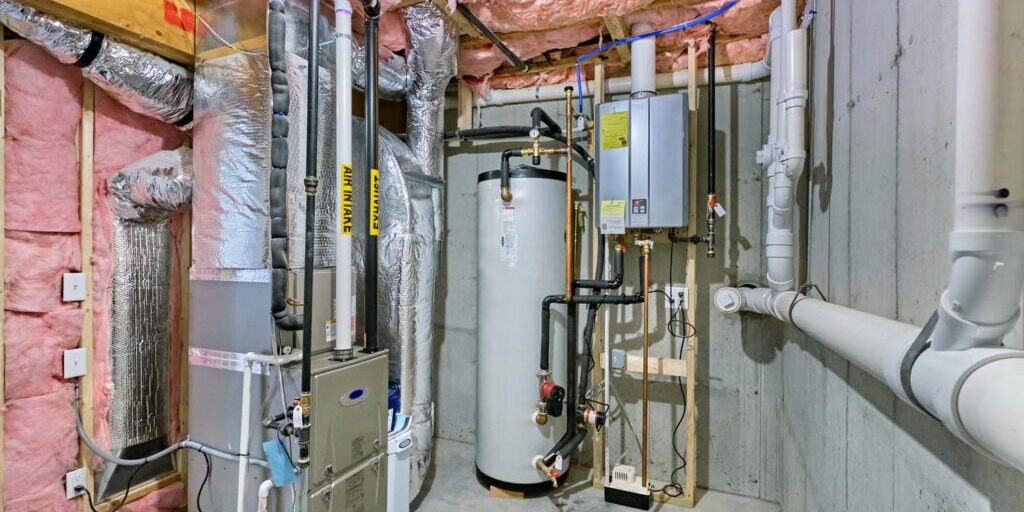
Basement HVAC comfort starts before drywall. If your basement feels cold, stale, damp, or uneven, the fix is rarely just adding another vent. Our basement renovation services plan the airflow, return paths, mechanical access, and comfort details before the finishes hide the easy corrections.
A comfortable basement needs five things working together: supply air, return air, zoning and controls, humidity and ventilation, and a wall-and-floor system that does not fight the HVAC. Miss one, and the space can still feel wrong even if the thermostat says the temperature is fine.
What Basement HVAC Needs To Do
Basement HVAC is not just heating and cooling. It is comfort control. The system has to move conditioned air into the space, pull air back out, manage moisture, and work with the way the basement is built.
Basements behave differently from upper floors. They sit below grade, their walls and slabs are cooler, and they often contain the home’s mechanical equipment. That combination makes small planning mistakes feel bigger once the basement is finished.
What Basement HVAC Comfort Means
Basement HVAC comfort is the balance of conditioned supply air, return air, ventilation, humidity control, and a well-insulated envelope.
That definition matters because comfort is not one product. It is not one vent, one thermostat, or one dehumidifier. It is the result of several systems working together before the room is closed up and decorated.
Why Basements Feel Different From Upper Floors
Basements often feel cooler because they touch the ground on more sides than the rest of the house. The walls, slab, rim joist areas, and corners can stay cold even when warm air is being supplied. That is why a basement can feel chilly while the thermostat reads 21°C.
Air movement is also different below grade. Basement rooms often sit behind doors, under bulkheads, and around mechanical runs. If the layout blocks airflow, conditioned air can enter the room but fail to move through it properly.
So the problem is not always “not enough heat.” Sometimes the problem is still air, cold surfaces, moisture, or poor return paths.
The Comfort Goal Before Drywall
The goal is not to make the basement identical to the second floor. The goal is to make it predictable, dry, and comfortable across seasons. That means warm enough in winter, controlled in summer, and not stale when people actually use the space.
HVAC decisions belong before ceilings and walls close. After drywall, every duct change, return path correction, bulkhead adjustment, or access fix gets slower and more expensive.
Plan comfort while the basement still looks unfinished. That is when the cheapest corrections are still available.
Basement HVAC Return Air Is The Part Homeowners Miss

Basement HVAC return air is the path that lets air leave the room and get back to the system. It is not an optional bonus. It is part of how air moves.
A basement with supply air but poor return air can feel stuffy, pressurized, noisy, or uneven. Adding another supply vent without thinking about the return path can make the comfort problem worse, not better. Air needs a route.
What Return Air Actually Does
Supply vents push conditioned air into the basement. Return air gives that air a way back to the HVAC system. Without that path, air movement becomes weak, uneven, or dependent on door gaps and hallway leaks.
That is why a room can have warm air entering and still feel uncomfortable. The air may not be circulating through the whole space. It may be pooling, short-cycling, or failing to reach the areas where people sit.
A good basement plan asks two questions for every finished area: where does air enter, and how does it get back?
Signs You May Not Have Enough Return Air
Return air problems usually show up as comfort complaints, not obvious failures. The furnace works. The vents blow. The basement still feels off.
Common signs include:
- The basement feels stuffy even when the system runs.
- Temperatures swing from room to room.
- Doors make comfort worse when closed.
- Vents feel noisy or weak.
- Upstairs comfort changes when basement doors are open or closed.
- The basement smells stale after long periods of use.
These signs do not prove one specific cause. They tell you airflow needs to be reviewed before finishing. That review should happen before walls, ceilings, doors, and built-ins lock the layout in place.
Why A Door Undercut Is Not A Real Plan
A door undercut can help a small airflow issue, but it is not a real basement return-air strategy. It relies on a gap at the bottom of a door, and that gap can be reduced by rugs, thresholds, flooring changes, or the way the room is used.
It also may not move enough air for a finished room that gets regular use. A gym, office, bedroom, theatre, or playroom needs a better plan than “air will find a way.”
Ask the HVAC contractor how air gets back from each finished area. Do not stop at where air enters.
Supply Air, Duct Runs, And Register Placement
Supply air still matters. A finished basement needs conditioned air delivered where people use the space. The mistake is treating supply vents as the whole solution.
Good supply planning works with the layout, ceiling design, doors, and return-air strategy. Poor supply planning creates noisy vents, short runs that dump air in the wrong spot, or long rooms where one end feels good and the other feels ignored.
More Vents Is Not Always More Comfort
Adding registers can help when the system can support them and the air has a path back. But more vents are not automatically better. Poorly planned vents can steal airflow from other rooms, create noise, or make one area heat quickly while the rest stays stagnant.
More holes in ductwork do not automatically mean better comfort.
The better question is whether the system is balanced for the finished layout. A basement renovation changes how the space is used, so airflow should be reviewed with the new rooms in mind.
Long Runs, Bulkheads, And Basement Ceilings
Basement duct runs often compete with beams, plumbing, wiring, and low ceiling areas. A clean ceiling design matters, but it cannot ignore airflow.
Bulkheads should be planned around real duct paths. That means looking at where ducts actually run, where registers need to land, and where future access still matters.
A finished ceiling should make the basement feel intentional. It should not hide a bad airflow decision.
Keep Registers And Returns Clear
Even a good HVAC layout can fail if registers and returns get blocked by furniture, built-ins, storage walls, or doors. This matters in basements because storage often creeps into every open corner.
Natural Resources Canada’s guidance on operating home heating systems notes that forced-air systems need warm-air vents and return-air grilles kept clean and unobstructed, and that inadequate or poorly placed return-air grilles and ducts can contribute to occupant discomfort and higher heating bills.
So plan the room as it will actually be used. A return hidden behind a sofa or storage cabinet is not doing the job you paid for.
Zoning And Controls: When They Help And When They Don’t
Zoning can help basement comfort, but it is not magic. It works best when the airflow, insulation, and humidity plan are already sound. Controls can fine-tune comfort, but they cannot rescue a basement with weak supply, no real return path, cold walls, or damp air.
What Zoning Means In A Basement
Zoning means controlling different areas of the home separately. In a basement, that usually means the lower level does not depend entirely on the main-floor thermostat to decide when heating or cooling should run.
This can help when the basement has different comfort needs than the upstairs. A basement theatre used at night, a home gym used early in the morning, or a guest suite used seasonally may not match the main floor’s schedule. The point of zoning is control. It gives the basement a better voice in the system.
When A Separate Basement Zone Makes Sense
A separate basement zone may make sense when the basement is large, used often, includes bedrooms, has a distinct exposure, or consistently runs cooler or more humid than the rest of the home. It can also help when the basement has a different use pattern from the main floor.
Think about real life. A storage room needs less comfort planning than a home office. A gym creates different heat and ventilation needs than a theatre. A bedroom needs more consistency than an occasional playroom. Controls should match how people use the space, not just how the floor plan looks.
When Zoning Becomes A Band-Aid
Zoning can disappoint when it is used to cover basic build problems. If the return path is weak, the supply is poor, the rim joist leaks, the walls bridge cold, or humidity stays high, a separate control may only make the problem easier to notice.
Zoning should fine-tune comfort, not compensate for a poor basement build. Start with the envelope and airflow. Then decide whether zoning is the right next layer.
Humidity, Ventilation, And Air Quality

Comfort is not only temperature. A basement can be warm enough and still feel damp, stale, or heavy.
That is why humidity and ventilation belong in the HVAC conversation. They affect how the room feels, how finishes age, and how healthy the space stays over time.
Comfort Isn’t Just Temperature
Humidity changes how basement air feels. Too much moisture can make the space feel clammy in summer, even if the temperature looks acceptable. It can also raise the risk of odour, condensation, and mould if materials stay damp.
Health Canada’s guidance on addressing moisture and mould recommends maintaining indoor relative humidity between 30% and 50%, and using exhaust fans and range hoods as part of moisture control.
This is why “the thermostat says it’s fine” is not enough. Basement comfort needs temperature and moisture under control.
Dehumidifiers, HRVs, ERVs, And Fans
A dehumidifier removes moisture from the air. Bathroom fans and laundry exhausts remove moisture and odours at the source. HRVs and ERVs exchange indoor and outdoor air in a more controlled way, depending on the home and system design.
These are not interchangeable tools. A dehumidifier does not replace proper bathroom exhaust. A bathroom fan does not solve whole-basement stale air. An HRV or ERV must be planned as part of the home’s ventilation strategy.
Health Canada’s guidance on ventilation and the indoor environment explains that mechanical ventilation uses fans, ducting, and designed openings, and that ventilation needs depend on the house, occupants, and system choices.
Bathrooms, Laundry, And Odours
Basement bathrooms, laundry rooms, gyms, and wet bars change the air-quality picture. They add moisture, odours, and use patterns that a basic storage basement never had.
That means ventilation should be planned before framing. Once the bathroom is placed, the laundry route is set, and the ceiling is closed, fixing poor ventilation becomes much harder.
For a deeper look at moisture, odour, and comfort planning, read our guide to basement humidity and air quality.
The Thermal Envelope: Why HVAC Can’t Fix Bad Walls
HVAC cannot rescue a basement that leaks heat, holds moisture, or creates cold surfaces everywhere. Comfort depends on the system and the shell.
If the walls, slab, and rim joist areas are cold, the room can still feel uncomfortable even with warm air moving through it. That is why basement finishing needs HVAC planning and building-envelope planning together.
Insulation, Air Sealing, And Thermal Bridging
Cold surfaces change how a room feels. Rim joists, concrete contact points, steel paths, and weak wall assemblies can create cold zones that pull comfort out of the space.
The thermostat measures air temperature. Your body feels air temperature, surface temperature, drafts, and humidity together. That is why a basement can technically be “warm” and still feel cold.
Before you ask the HVAC system to fight cold surfaces, understand thermal bridging in basement walls.
Cold Floors And Slab Comfort
Basements lose comfort through the floor as well as the walls. A cold slab can make the room feel unfinished even when the air temperature is acceptable.
Flooring choice, subfloor strategy, and insulation planning all affect how the space feels underfoot. This is especially true for playrooms, gyms, offices, and media rooms where people spend long periods in one place.
Do not ask the HVAC system to solve a floor problem by overheating the air. That usually creates uneven comfort.
Don’t Oversize Equipment To Mask Heat Loss
Bigger equipment is not automatically better. Oversizing can create short cycles, poor humidity control, and uneven comfort. It can make the system feel powerful without making the room feel balanced.
The right approach is to solve the envelope and airflow first, then adjust or size the system based on the actual finished plan. If the basement layout changes significantly, involve an HVAC professional early.
A basement should not need brute force to feel comfortable.
Mechanical Rooms And Access

Finished basements often fail when homeowners try to hide mechanical equipment too aggressively. The room looks cleaner, but the house becomes harder to service.
A mechanical room is not leftover space. It is the working heart of the basement.
Keep Equipment Serviceable
Furnaces, filters, humidifiers, HRVs, ERVs, shutoffs, cleanouts, and panels all need access. A beautiful wall that blocks service is not good design. It is a future problem with trim around it.
Plan doors, clear paths, and storage around equipment before framing. Do not wait until the mechanical room is boxed in to decide how a technician will change a filter or reach a shutoff.
The best finished basements make mechanical access feel intentional, not accidental.
Don’t Box In Airflow
Enclosing equipment without a plan can affect performance, serviceability, noise, and future repairs. The right access and clearance details depend on the equipment, installation, and applicable requirements, so this is not a place for guesswork.
The practical rule is simple: do not make the mechanical room pretty at the expense of the mechanical system.
Before closing the room, review the mechanical room do’s and don’ts for finished basements.
HVAC Changes, Permits, And Inspections
HVAC changes can affect more than comfort. They can affect ceiling height, bulkhead design, mechanical access, permit scope, and inspection timing.
When Ductwork Changes Need More Planning
Adding, moving, or extending ducts can affect more than one room. It can change airflow upstairs, create noise, shift bulkheads, limit ceiling height, or complicate access to other systems.
A basement contractor should coordinate with the right HVAC professional when ductwork changes are part of the scope. Requirements vary by municipality and project, so the safe path is to confirm what must be reviewed before work is hidden.
The weak plan is “we’ll figure the ducts out later.” Later usually costs more.
What To Leave Exposed Before Drywall
HVAC rough-ins should stay visible until the proper review or inspection stage is complete. Once drywall is installed, proving what is behind it becomes expensive.
The City of Toronto’s small-building inspection guidance lists structural framing inspection at completion, including rough-in of plumbing and HVAC, and insulation and vapour barrier inspection before installing interior services.
For the broader schedule and inspection sequence, review our guide to basement renovation inspections.
Basement HVAC Planning Checklist Before Drywall

To summarize, basement comfort is easiest to fix before the basement looks finished. Before drywall, confirm these details:
- Confirm how each finished area receives supply air.
- Confirm how air returns from each finished area.
- Check whether doors, storage, or furniture will block airflow.
- Review duct paths before bulkheads and ceiling plans are finalized.
- Plan humidity control for bathrooms, laundry, gyms, and living spaces.
- Keep mechanical equipment, filters, shutoffs, and panels accessible.
- Check insulation, air sealing, and cold-surface risks before relying on HVAC.
- Leave HVAC rough-ins visible until the right review or inspection stage is complete.
Comfort is not a last-minute trim decision. It is a pre-drywall planning decision.
Basement Comfort Problems And What To Check First
| Comfort Problem | Likely Driver | What To Check Before Drywall | Who To Involve |
| Basement Feels Stuffy | Weak return path or poor ventilation | Return-air route, door strategy, ventilation plan | HVAC contractor |
| Basement Is Cold In Winter | Envelope weakness or weak supply | Rim joists, insulation, supply placement | Contractor + HVAC contractor |
| Basement Feels Damp In Summer | Humidity and moisture load | Dehumidification, bathroom/laundry exhaust, drainage clues | Contractor + HVAC contractor |
| Some Rooms Are Comfortable, Others Aren’t | Poor distribution or closed-door airflow | Supply and return path for each room | HVAC contractor |
| Mechanical Room Is Noisy Or Hot | Enclosure or access issue | Door strategy, service access, equipment layout | Contractor + HVAC contractor |
| Ceiling Design Fights Ductwork | Poor bulkhead planning | Duct runs, beams, plumbing, ceiling heights | Contractor |
| Comfort Changes When Doors Close | Return imbalance | Transfer path or return strategy | HVAC contractor |
Once the ceiling plan, framing, and doors are fixed, every correction gets harder.
Common Basement HVAC Mistakes To Avoid
Most basement HVAC mistakes happen because the shortcut looks reasonable at first. Add a vent. Hide a duct. Close the mechanical room. Deal with humidity later. Those choices can work against the finished space. The goal is to avoid them before they become expensive.
Adding Supply Without Return
Adding warm or cool air without giving it a return path often creates uneven comfort. The room may feel better for a few minutes, but the air still does not circulate properly.
Supply and return need to be planned together. This is especially important in bedrooms, offices, gyms, and media rooms where doors may stay closed for long periods.
If your HVAC plan only talks about where air enters, it is incomplete.
Ignoring Moisture Until The Space Is Finished
Humidity is cheaper to plan for before drywall. After finishes go in, dampness shows up as odour, swelling materials, condensation, and mould risk.
This matters because basements are already moisture-sensitive. Bathrooms, laundry, gyms, and wet bars add more load. If you wait until the finished space smells musty, the fix may involve finished surfaces.
Moisture planning is comfort planning.
Closing Mechanical Access For A Cleaner Look
A clean wall is not worth blocked filters, panels, valves, cleanouts, or service routes. Finished basements need access by design.
You are not hiding the mechanical room. You are designing around it.
That means doors, clearances, storage, and bulkheads should be planned with future servicing in mind. A serviceable room is a better room.
Waiting Until Drywall To Talk About HVAC
Late HVAC changes are expensive because everything is connected. Ducts affect bulkheads. Bulkheads affect lighting. Lighting affects ceiling plans. Ceiling plans affect finishes. Finishes affect cost.
The best time to talk about HVAC is while the basement still looks unfinished. That is when routes are visible, options are open, and corrections cost less.
If comfort matters, HVAC belongs in the first planning conversation, not the last site meeting.
Plan Your Basement With Comfort From Day One
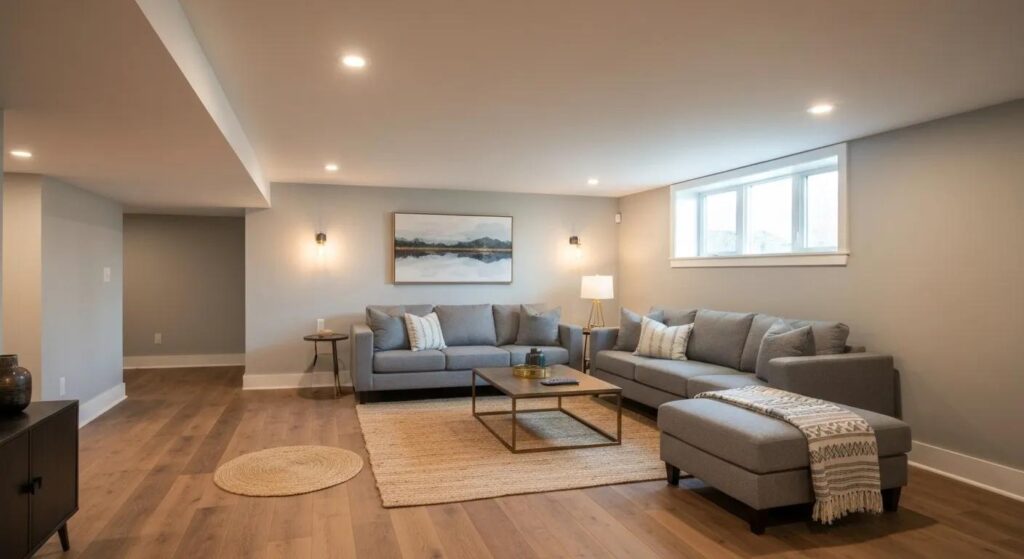
Comfort is not the last detail in a basement renovation. It is part of the plan from day one. Yorkland Homes plans basement projects with a transparent pricing contract model, a detailed and meticulously planned build schedule, and the discipline that comes from being a family owned business since 2010. Ask us about our on-time money back guarantee and Limited Liability Insurance. To plan airflow before the finishes, talk to our finished basement specialists.
Frequently Asked Questions
Yes, a finished basement usually needs a planned return-air path so air can circulate back to the HVAC system. Supply vents alone may not keep the space comfortable, especially when doors are closed. A return-air strategy should be reviewed before framing and drywall, not after the basement already feels stuffy.
The cause may be weak supply, poor return air, cold walls, rim joist leaks, thermal bridging, or cold floors. HVAC may be part of the fix, but the basement envelope needs review too. If the walls and slab stay cold, adding heat may only mask the issue. The space can still feel uncomfortable.
Sometimes, but adding vents without checking system capacity and return air can create new comfort problems. More supply does not help much if air cannot move through the room and back to the system. The better move is to review supply, return, duct layout, and room use together.
HVAC zoning lets different areas of the home be controlled separately. For a basement, this can help when the lower level has different comfort needs than the main floor. Zoning is most useful after the basics are right. It should not be used to cover poor airflow, weak insulation, or humidity problems.
A stuffy basement may have weak return air, poor air movement, poor ventilation, high humidity, or blocked registers. The pattern matters. Check whether doors make the problem worse, whether the space smells stale after use, and whether humidity stays high. Those clues help narrow the issue.
Yes. HVAC planning should happen before framing, ceiling bulkheads, insulation, and drywall. Late changes are harder because ducts, access, ceiling height, lighting, and finishes are already connected. Comfort is easiest to design when the basement is still open.
They can, depending on scope and municipality. Any rough-in work that needs review should stay visible until the correct inspection or sign-off happens. Do not cover duct changes, insulation, or related rough-ins before confirming what your project requires.
Check out more posts below...
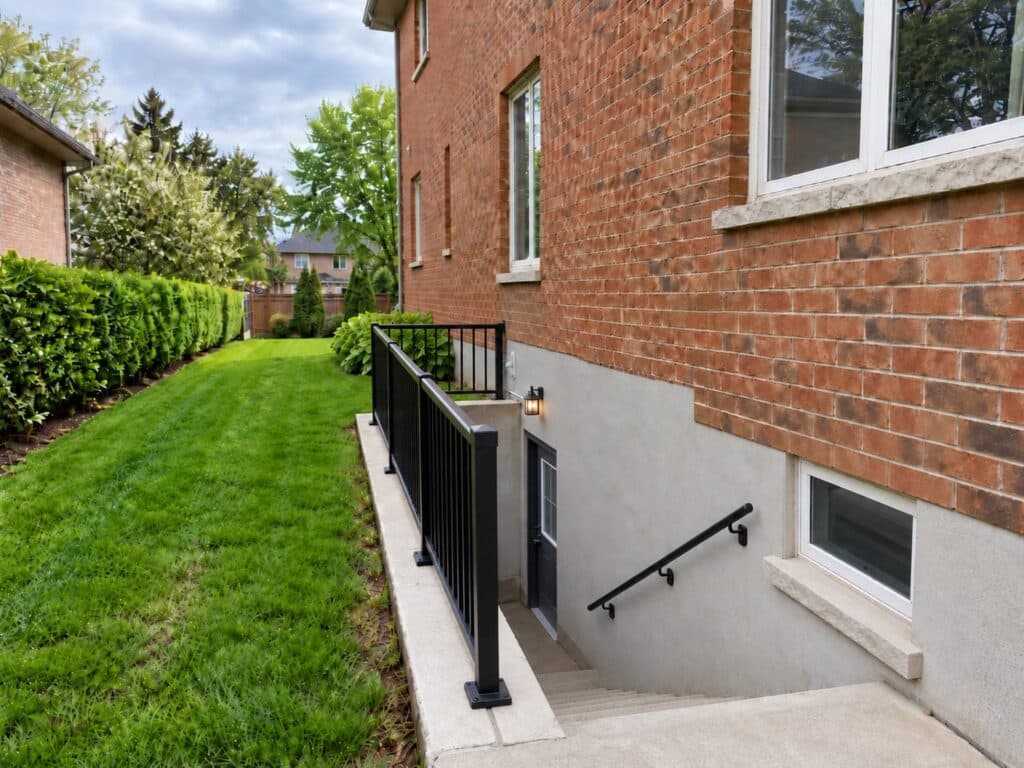
Does a Newmarket Basement Suite Need a Separate Entrance?
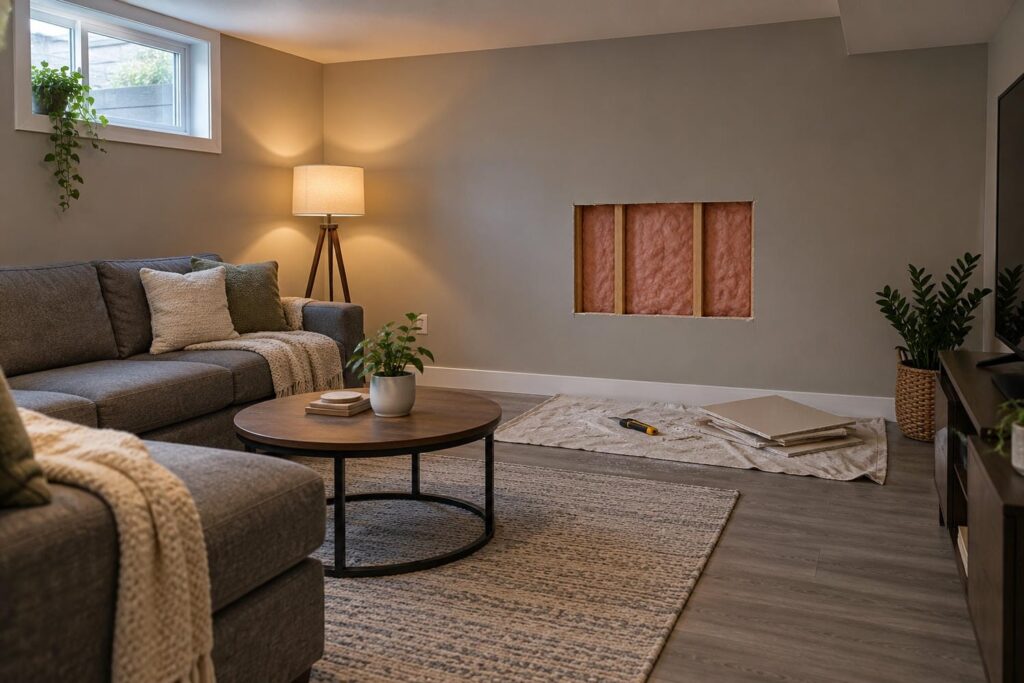
Finished Basement Without a Permit? Legalizing an Unpermitted Basement Renovation in Newmarket
What Newmarket Basement Apartments Rent For and What Drives the Rate
Can You Put a Kitchen in Your Basement? Ontario Rules Explained
Basement Backwater Valve Flood Prevention: What It Really Costs in the GTA