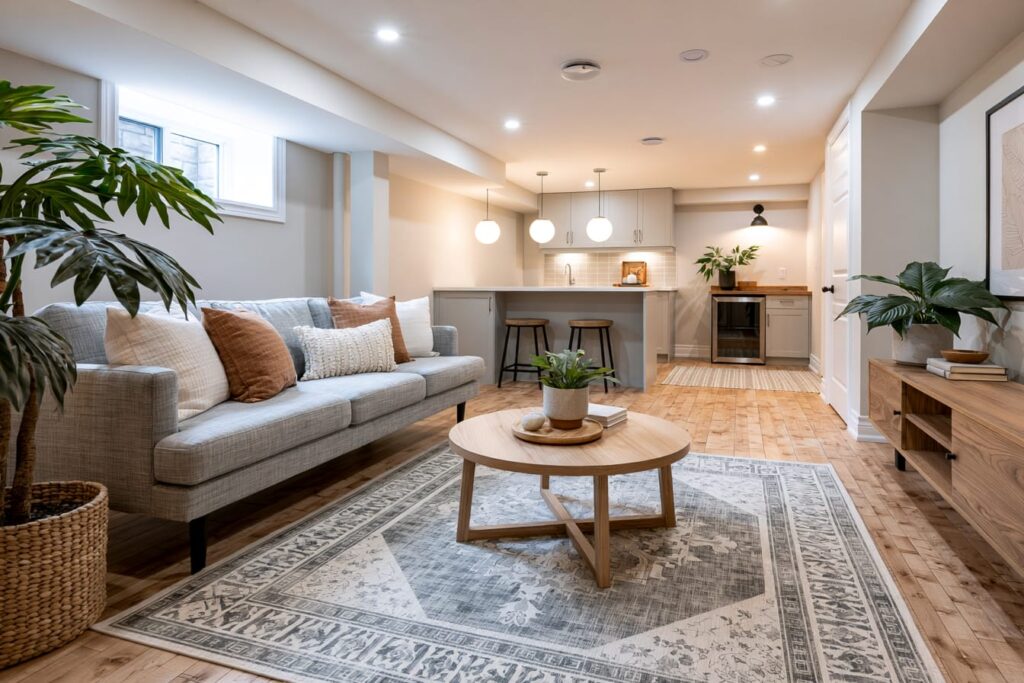
Basement Subfloor Systems: Keep Floors Warm, Dry, And Level In The GTA

Cold floors, musty smells, and wavy vinyl are solved the same way: decouple the finish from concrete with a subfloor system that manages moisture, adds a thermal break, and delivers a flat surface. Done right, you get warmer steps, fewer callbacks, and finishes that last. If you want a clean, end-to-end plan, see our basement renovation services to learn how we design, permit, and build subfloors that pass inspection and feel right from day one.
Basements are not just “another room.” Concrete is cold, porous, and often uneven. The system you choose needs to handle damp conditions, height limits, and the finish floor you want. Below, we explain when you need a subfloor, which options work below grade, and how to avoid common mistakes.
What A Subfloor Does Below Grade (And Why It Matters)
A basement subfloor sits between the slab and your finished flooring. Its job is simple: control moisture, interrupt heat loss, and create a stable plane. Without that layer, warm interior air meets a cold surface, condensation forms, and finishes suffer.
Two big ideas guide selection. First, moisture tolerance. Dimpled membranes and foam boards handle the odd spill and seasonal dampness better than wood-only methods. Second, effective R-value underfoot. Even a modest thermal break makes a big difference to comfort, especially in winter.
Here’s the catch: not every system belongs everywhere. Gyms, playrooms, washrooms, and suites have different needs. Start with risk (water, humidity), then headroom, then the finish floor.
The Three Jobs Of A Good Subfloor
A sound choice does three things well. It breaks contact with concrete to reduce condensation risk, it warms the walking surface with a continuous thermal layer, and it spreads load so floors feel solid, not spongy.
- Moisture control: creates a drying path or keeps the condensing surface away from finishes.
- Thermal comfort: raises surface temperature so rooms feel comfortable with less heat.
- Load distribution: supports furniture and activity without squeaks or deflection.
When You Need A Subfloor (Symptoms And Triggers)
If your floors feel cold even with rugs, if laminate edges are swelling, or if you see a powdery residue (efflorescence) on the slab, a subfloor will likely help. Uneven slabs that telegraph through vinyl or cause furniture to rock are another signal. The more you rely on the space – playroom, suite, office – the more value you get from a proper base.
Scope matters. If you’re adding a washroom, planning a home gym, or installing radiant heat, the subfloor choice changes. Washrooms need tile-friendly assemblies. Gyms benefit from impact absorption. Radiant needs the right layering to avoid cooking adhesives or trapping heat.
For air quality and moisture sources that mimic slab problems, read Managing Humidity And Air Quality In Basements. Solve dampness at the source before you finish.
Quick Check: Slab Flatness And Moisture Readiness
Use a straightedge to spot ridges and dips. Minor undulations can be handled by floating systems; bigger waves need grinding or self-leveller. For moisture, a taped-plastic “sweat test” is a simple screen. Obvious water entry means fix drainage first, then build.
Your Subfloor Options (What Works Below Grade)
Choose based on moisture risk, height budget, finish floor, and cost. Below are repeatable assemblies that perform well in GTA basements.
Dimpled Panel Systems (Floating OSB Over Membrane)
These snap-together panels lift finishes off the slab and allow incidental moisture to move. They install fast, keep height gains modest, and pair well with vinyl plank, laminate, and carpet tile. Watch seams at washrooms and plan transitions where tile meets panels.
Rigid Foam (XPS/EPS) + Plywood/OSB
Foam creates a continuous thermal break, then plywood or OSB spreads load. It’s comfortable, predictable, and easy to tailor for height or R-value. The slab must be clean and relatively flat. Door, stair, and threshold math matters here. For insulation context and inspection timing, see Insulating Your Basement The Right Way.
Closed-Cell Spray Foam + Plywood (Hybrid Or Edge Zones)
Spray foam excels along cold edges, at irregular walls, and in tricky corners. It air-seals and insulates in one step, then plywood finishes the surface. Use it selectively if budget is tight. Mask well and plan ventilation during application.
Sleepers + Plywood
This method creates a service chase and hits target heights, but it’s more vulnerable to moisture unless you include a membrane. It also costs more labour hours. We reserve it for specific constraints.
Cement Board Over Membrane (Tiled Wet Areas)
Bath and laundry zones need tile-ready layers that tolerate water. Cement board over a membrane gives you a stiff surface and a drainage strategy. Tie it into wall waterproofing details so thresholds stay dry and flush.
Level First Or Float It? Addressing Uneven Slabs
Some floating systems absorb small imperfections. Large waves, high ridges, or deep bowls demand prep: grinding for highs, self-levelling underlayment for lows. Prime correctly, respect cure times, and maintain expansion joints. A flat base lets panels or foam lock up tight and protects click-floors from stress.
For the full decision tree and prep steps, see Dealing With Uneven Floors During A Basement Renovation.
Do the math early: subfloor thickness + underlayment + finish. A 19 mm panel plus 6 mm underlayment plus 6 mm LVP raises floors by roughly 31 mm. Plan for trim adjustments, door cuts, and stair nosings. Good drawings prevent awkward thresholds.
Moisture Management Comes First
Subfloors are not a cure for leaks. Fix bulk water, then build. If your area has a flooding history, review the City’s program for downspouts, grading, backwater valves, and sump options before you finish. A simple dehumidification plan also helps keep RH in the right band for comfort and materials.
Keep water moving away from the foundation with proper grading and downspouts. Where high water tables or backups are common, consider a sump and backwater valve. In summer, target relative humidity that keeps the space comfortable without encouraging condensation on cool surfaces. For indoor air best practices, see Managing Humidity And Air Quality In Basements.
Finishes And Underlayments That Play Nice
Match the finish to the function. LVP and laminate perform well over dimpled panels or foam-plus-plywood, provided the subfloor is flat. Engineered wood wants more stable conditions and careful humidity control. Tile belongs on cement board or a foam-board system rated for tile, not directly on panels meant for floating floors.
Underlayments influence feel and sound. In suites or media rooms, acoustic layers reduce transfer between spaces. Confirm compatibility among the subfloor, underlayment, and finish so warranties stay intact.
Radiant adds comfort and efficiency when layered correctly. Electric mats need the right substrate, spacing, and a thermostat sensor embedded where the manufacturer specifies. Hydronic loops demand height planning and careful transitions. Pair radiant with foam-first assemblies to keep heat flowing into the room, not into the slab.
Permits, Inspections, And When Subfloors Get Looked At
A subfloor alone may not require a permit. But as part of a full basement renovation – especially with new plumbing, structural changes, or insulation – permits and inspections come into play. Don’t cover assemblies tied to permitted work before they’re seen and signed off.
If your subfloor is part of a permitted package, add inspection holds to the calendar and keep stamped plans on site. For permit triggers and a clean application process, read Do I Need A Permit To Renovate My Basement.
At-A-Glance Comparison
| System | Best For | Watch-Outs |
| Dimpled Panel | General rec rooms; quick warmth | Seam sealing; bathroom transitions |
| Foam + Plywood | Highest comfort; flexible heights | Height at stairs/doors; clean slab |
| Spray Foam + Ply | Cold edges or irregularities | Cost; ventilation/masking |
| Sleepers + Ply | Running services; target heights | Moisture risk without membrane |
| Cement Board + Membrane | Tiled wet zones | Substrate prep; slope/thresholds |
Step-By-Step: Choosing The Right Subfloor
Start with risk. Identify water entry, humidity issues, and how often the space sees spills or wet boots. Then assess height and flatness. If doors or stairs are already tight, choose thinner assemblies or plan adjustments up front.
Next, select by zone and finish. Rec rooms lean toward panels or foam-plus-plywood; washrooms get cement board over a membrane; edge areas or irregular corners may need spot spray foam. Finally, order materials, prep the slab (SLC or grind where needed), stage transitions, and install. If the project is permitted, keep assemblies visible and call inspections before you cover.
Plan Your Subfloor Properly – We’ll Help You Build It Right
Choose a subfloor that matches your moisture risk, height limits, and finish, then prep the slab and plan transitions before you build. If you want help turning those decisions into a code-clean plan and a smooth build, book a quick consult through our basement renovation services. We’ll design the right assembly, sequence inspections, and hand you a basement that feels warm, dry, and solid.
Because we’ve been a family-owned team since 2010 with Limited Liability Insurance, we protect your home as if it were ours. We use a transparent pricing contract model and sequence work around inspection windows, which keeps costs and timelines honest.
FAQs
Not all, but most older GTA homes benefit from a thermal break and moisture control underfoot. If your slab is already insulated and dry, you may be able to install certain finishes directly. We still recommend a risk check for flatness and humidity.
Not if you choose the right system for the risk level. Dimpled membranes allow drying paths. Foam-first designs keep the condensing surface away from finishes. Problems come from the wrong assembly in the wrong place.
Expect 12–35 mm for most systems. Add your underlayment and finish thickness to calculate thresholds, trim cuts, and stair nosings. Plan those adjustments during design so doors swing freely and transitions look intentional.
Some vinyl products allow direct-to-slab installation if the surface is flat and dry. Comfort, however, improves with a thermal break. Follow the manufacturer’s moisture and substrate specs to protect warranties.
Fix highs and lows first. Grinding knocks down ridges; self-leveller fills bowls. Once flat, floating systems lock up better and finishes wear evenly. For details, see Dealing With Uneven Floors During A Basement Renovation.
Usually no. But as part of a permitted renovation, related scopes (insulation, plumbing, structural) trigger inspections. Keep assemblies visible until inspected, then close up.
Yes, with the right layering. Verify compatibility among the heat system, subfloor, and finish. Place sensors where the manufacturer specifies and avoid trapping heat against the slab.
Check out more posts below...
Finished Basement Without a Permit? Legalizing an Unpermitted Basement Renovation in Newmarket
What Newmarket Basement Apartments Rent For and What Drives the Rate
Can You Put a Kitchen in Your Basement? Ontario Rules Explained
Basement Backwater Valve Flood Prevention: What It Really Costs in the GTA